Secondary tabs
Submission information
Submission Number: 66
Submission ID: 104
Submission UUID: 824a9442-1305-4bd8-842b-f8472238e487
Submission URI: /ga/form/submit-contribution
Cruthaithe: Fri, 13 Feb 2026 - 09:20
Déanta: Fri, 13 Feb 2026 - 12:32
Changed: Wed, 13 May 2026 - 08:12
Remote IP address: 91.140.28.198
Submitted by: ANGELA FRAGKOU
Teanga: English
Is draft: Níl
Current page: webform_confirmation
| Given name | ANGELA |
|---|---|
| Surname | FRAGKOU |
| fragkou.angela@gmail.com | |
| I understand that by submitting this form, I consent to the use of my data for the purposes of the 2026 Forum on Artistic Research'. | Tá |
| I agree to the terms of service. | Tá |
| Title | Light Diffraction and Artificial Nanostructures: Re-Imagining Living Matter in Contemporary Art |
| Format | Poster presentation |
| Main language | English |
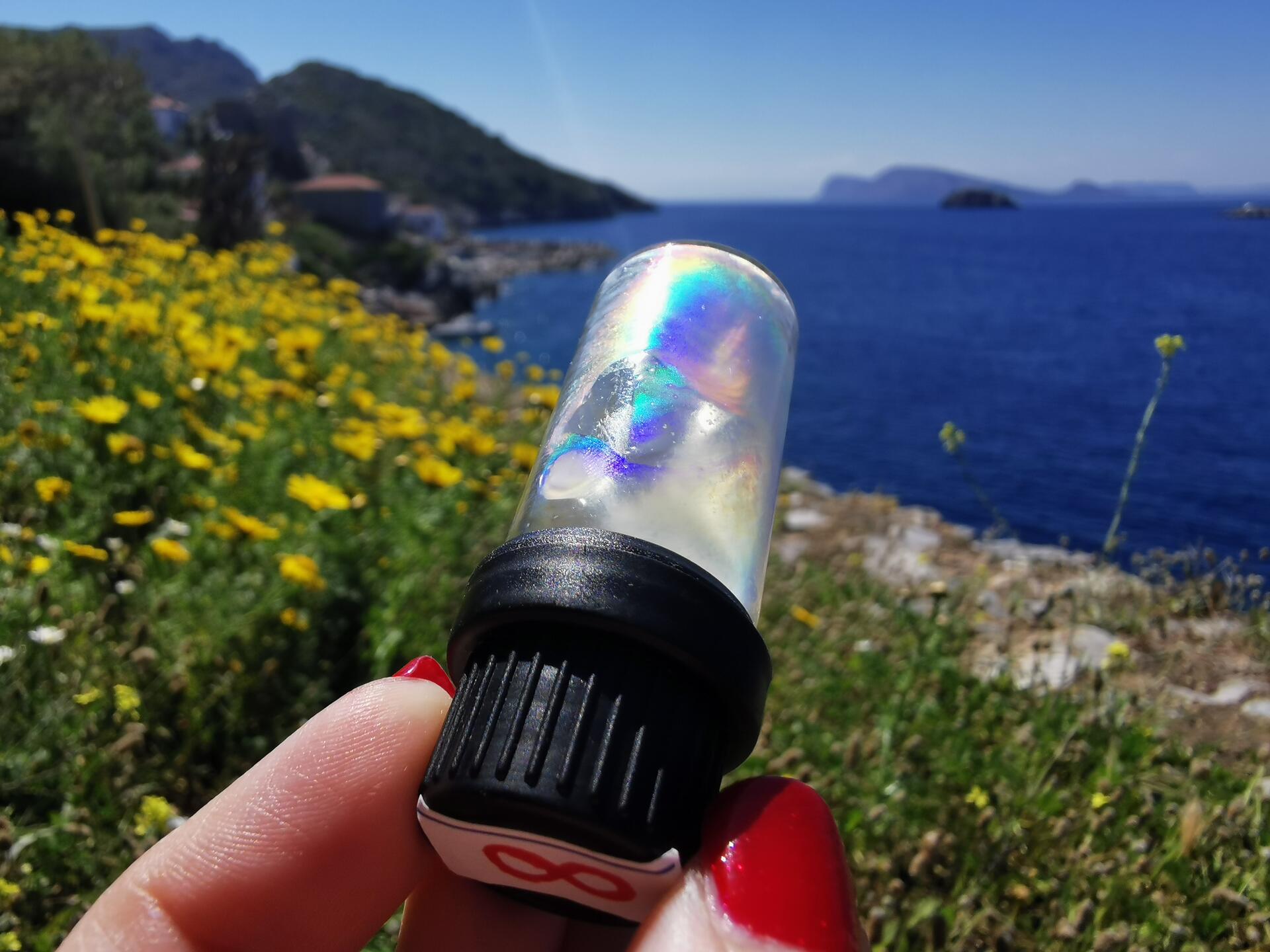
| Abstract | This contribution presents a case study in which the behavior of living matter is re-imagined through an artificial nanostructure, the liposome, within contemporary artistic research. The liposome, a biomimetic model of cellular membranes, enables the exploration of self-assembly, phase transitions, and thermotropic properties in a relational artistic context. Through visual installations across diverse urban and natural sites in Athens, light diffraction patterns generated by liquid-crystalline biomaterials reveal complex interactions between material behavior, environmental conditions, and human perception. The project integrates laboratory-based experimentation at the pharmaceutical nanotechnology lab of the National and Kapodistrian University of Athens with participatory and site-specific artistic practices. Collaborative workshops and experimental documentation foster dialogue between science and art, emphasizing the aesthetic and conceptual potential of nanoscale phenomena. The study builds on post-humanist perspectives, situating living matter and its structural transformations within broader ecological, social, and technological frameworks. Engagement with international networks, including the MERZ Erasmus+ programme, further situates the project within transdisciplinary approaches to art-science research, highlighting the relevance of endangered and minoritized conceptual practices in contemporary artistic inquiry. This work demonstrates how artificial nanostructures can serve as mediums for exploring complexity, materiality, and the dynamic interplay of light, space, and perception. |
| Image |
|
| Short biographies of the presenter(s) |
|
| Previous presentations or iterations of the research | Previous presentations include the MERZ Akademie Smart Hybrid Forms program (Erasmus+, 2022), the Onassis Stegi Hackathon (Jul 2022), an exhibition/workshop at the NKUA Dept. of Pharmacy (Oct 2022), research with the NKUA Pharmaceutical Nanotechnology Lab (2022), and the 2025 article “Re-Imagine the Behavior of Living Matter: The Colorless Color and an Artificial Nano-Structure in Contemporary Art.” |
| Additional information | The poster presentation includes visual documentation, diagrams, and selected stills from laboratory and field research. It is accompanied by a short video produced at Merz Akademie that documents the experimental process. The material bridges art practice and life science research, highlighting methodology, interdisciplinarity, and the translation of laboratory phenomena into contemporary art. |
| Spatial and technical requirements | Poster presentation requirements. |
| Potential risks or ethical concerns | No direct risks to participants are involved. The work involves nanomaterials and liposome-based artificial structures developed in prior laboratory contexts under institutional biosafety and ethics protocols. It does not include genetic modification or handling of living organisms. Ethical reflection focuses on environmental impact and the responsible use of biomimetic materials within an artistic research framework. |
| Create a user account for SAR 2026 | Tá |
| Create new user | ANGELA FRAGKOU |