Secondary tabs
Submission information
Submission Number: 47
Submission ID: 80
Submission UUID: e52b0954-0b75-46f5-b438-2ac97d476b7c
Submission URI: /ga/form/submit-contribution
Cruthaithe: Wed, 4 Feb 2026 - 22:22
Déanta: Sat, 28 Feb 2026 - 22:40
Changed: Wed, 13 May 2026 - 08:51
Remote IP address: 109.79.55.187
Submitted by: AnnB
Teanga: English
Is draft: Níl
Current page: webform_confirmation
Flagged: Tá
Personal Information
Your contribution
Living Rhythms: An Artistic Enquiry into Island Life Beyond Language
English
Living Rhythms presents Rhythmanalysis+, an artistic research project that investigates how everyday sensory rhythms support regulation, care, and connection under conditions of disruption. The project emerged during the COVID-19 pandemic from a concern with how the breakdown of routine and predictability affected mental health, particularly in contexts where regulation depends on repetition and embodied familiarity. Grounded in lived experience of neurodivergence and informed by island life on Sherkin Island, the research treats everyday sensory rhythms — wind, salt air, tides, birds, movement — as forms of situated knowledge that often remain marginal to language-centred enquiry.
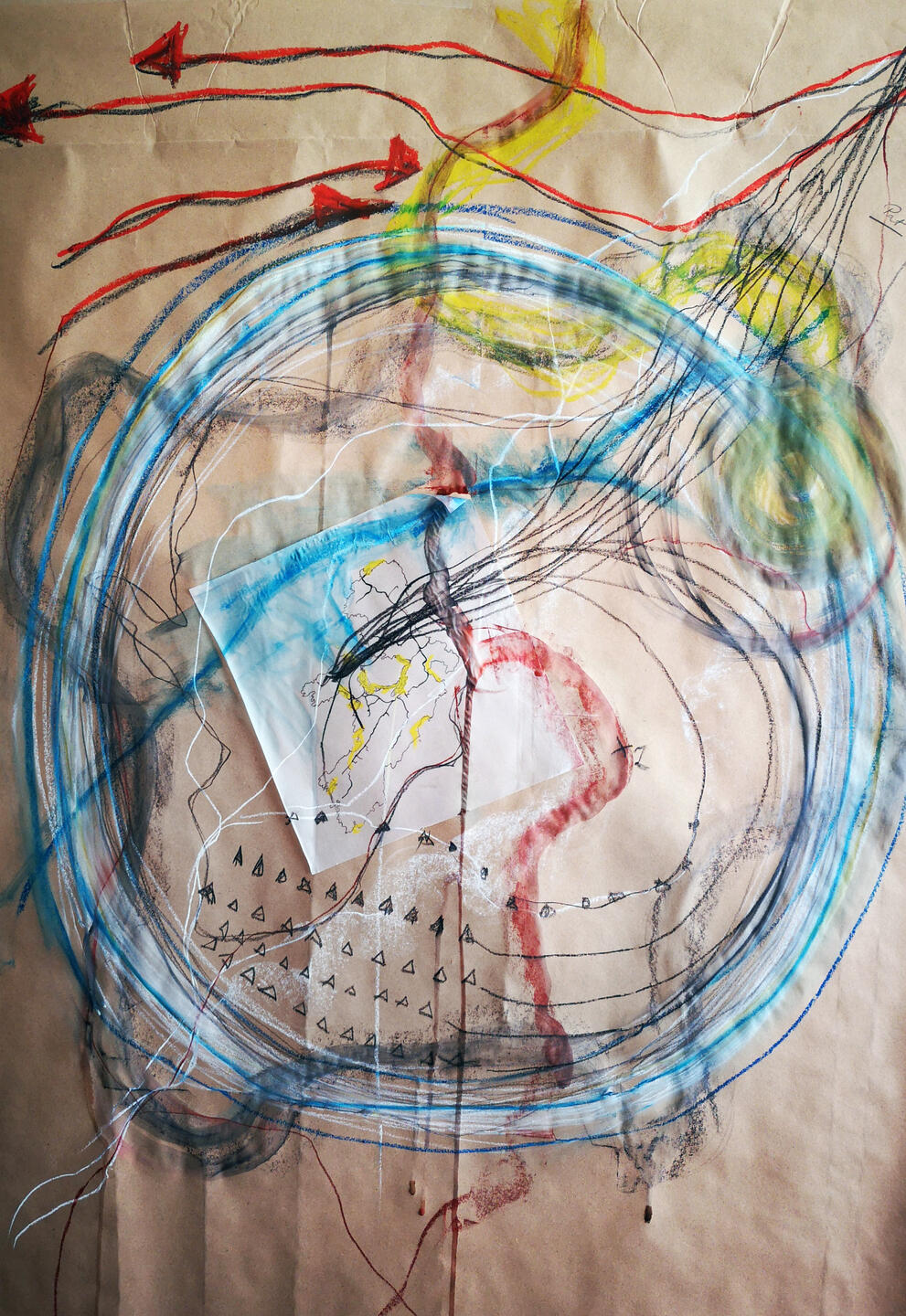
Working collaboratively with four island residents during periods of enforced isolation, the project gathered sensory accounts of daily life through phone calls, Zoom conversations, sound recordings, photographs, and drawings. Rather than treating these materials as data to be analysed, they were translated through drawing, sound composition, and virtual reality into an immersive environment that operates beyond language. Spoken voices and environmental sounds are present within the work, but meaning emerges through rhythm, spatial sound, and embodied attention rather than explanation or narrative. Virtual reality functioned not as spectacle or representation, but as an ethical mediator, allowing sensory, emotional, and relational information to be held together without exposing participants or requiring physical proximity
The research demonstrates how artistic practice can function as a mode of enquiry into minoritised, embodied knowledges that resist standardisation and extraction. What emerged was not a fixed outcome, but an ongoing process in which rhythm became both method and material. Through reflection and writing, the project continues to evolve, raising open questions about care, technology, and how sensory life and forms of regulation have shifted in the aftermath of COVID.
Working collaboratively with four island residents during periods of enforced isolation, the project gathered sensory accounts of daily life through phone calls, Zoom conversations, sound recordings, photographs, and drawings. Rather than treating these materials as data to be analysed, they were translated through drawing, sound composition, and virtual reality into an immersive environment that operates beyond language. Spoken voices and environmental sounds are present within the work, but meaning emerges through rhythm, spatial sound, and embodied attention rather than explanation or narrative. Virtual reality functioned not as spectacle or representation, but as an ethical mediator, allowing sensory, emotional, and relational information to be held together without exposing participants or requiring physical proximity
The research demonstrates how artistic practice can function as a mode of enquiry into minoritised, embodied knowledges that resist standardisation and extraction. What emerged was not a fixed outcome, but an ongoing process in which rhythm became both method and material. Through reflection and writing, the project continues to evolve, raising open questions about care, technology, and how sensory life and forms of regulation have shifted in the aftermath of COVID.
- Ann Burns is an Irish artist and artistic researcher whose practice explores sensory knowledge, everyday rhythms, and relational ways of working with people and place. Her work is grounded in socially engaged practice and often involves drawing, sound, and immersive media. She has a particular interest in island contexts, embodied forms of knowing, and ethical approaches to care, participation, and non-extractive research. She is currently developing practice-led research that reflects on sensory life, regulation, and technology in the aftermath of COVID-19.
The initial iteration of Rhythmanalysis+ was developed during a practice-led master’s project developed during the COVID-19 pandemic, resulting in a VR installation created through remote collaboration with island residents and exhibited in 2022. Since then, the research has evolved through critical reflection and writing, including a journal publication, and is currently being reframed through digital upskilling and renewed attention to post-COVID sensory life, regulation, and care.
Requirements
The presentation will take the form of a live, reflective talk (approximately 20 minutes), supported by projected images and short sound excerpts drawn from the research exposition. Rather than presenting a finished outcome, it will focus on process - tracing how drawing, listening, and immersive environments have developed over time. The session will open space for conversation around return, situated practice, and the role of rhythm and attention in artistic research.
Standard conference presentation setup: projector, screen, laptop connection (HDMI), and audio playback capability for short sound excerpts. No special spatial configuration required.
The research involves prior remote engagement with island community participants. All material shared in the presentation respects participant confidentiality and consent agreements established during the research process. No sensitive personal data will be disclosed. The work reflects critically on relational and situated methods, but presents no foreseeable physical, psychological, or environmental risks.
Níl