Secondary tabs
Submission information
Submission Number: 384
Submission ID: 456
Submission UUID: 1abe9a31-e8dd-4cbf-a15d-0e1913fcd43f
Submission URI: /ga/form/submit-contribution
Cruthaithe: Mon, 2 Mar 2026 - 18:24
Déanta: Mon, 2 Mar 2026 - 18:39
Changed: Wed, 13 May 2026 - 08:12
Remote IP address: 185.104.138.119
Submitted by: Anonymous
Teanga: English
Is draft: Níl
Current page: webform_confirmation
Personal Information
Your contribution
Conceptual Cycles. Processing Sounds
English
Conceptual Frequencies and Loops. A Feminist Approach
Conceptual Frequencies and Loops is a feminist conceptual performance that treats frequency and repetition not as sonic effects but as structures of power, memory, and embodied labor. The work situates itself within the lineage of conceptual art in which the idea constitutes the primary artwork, drawing from practices associated with Yoko Ono, Adrian Piper, and Mierle Laderman Ukeles. In this tradition, the performance is governed by a proposition: repetition isWhat I mean with tis that the performance makes something perceptible that normally remains concealed. Structures—whether musical, social, or institutional—tend to appear stable and self-sustaining. A loop seems to run by itself. A rhythm seems continuous. A system appears coherent. We rarely perceive the effort required to keep it from collapsing.
In this performance, the repetition is not automated. It must be manually sustained. The performer must continuously re-initiate the tone, the breath, or the gesture. Over time, strain, instability, and deviation become audible. The sound no longer signifies only frequency; it carries the trace of effort. What the audience hears is not just repetition, but the labor of maintaining repetition.
To say that the work “renders audible the maintenance of structure itself” means that it shifts attention away from the product—the loop—and toward the ongoing work that keeps the loop intact. The structure does not exist independently; it is upheld moment by moment by a body. When fatigue alters the sound, the listener becomes aware that continuity was never natural or automatic. It was sustained.
Within a feminist conceptual framework, this matters because many social structures persist through forms of labor that remain unseen and undervalued. By making maintenance audible, the performance transforms repetition into evidence of work. The sound becomes a record of endurance rather than an aesthetic surface.
Conceptual Frequencies and Loops is a feminist conceptual performance that treats frequency and repetition not as sonic effects but as structures of power, memory, and embodied labor. The work situates itself within the lineage of conceptual art in which the idea constitutes the primary artwork, drawing from practices associated with Yoko Ono, Adrian Piper, and Mierle Laderman Ukeles. In this tradition, the performance is governed by a proposition: repetition isWhat I mean with tis that the performance makes something perceptible that normally remains concealed. Structures—whether musical, social, or institutional—tend to appear stable and self-sustaining. A loop seems to run by itself. A rhythm seems continuous. A system appears coherent. We rarely perceive the effort required to keep it from collapsing.
In this performance, the repetition is not automated. It must be manually sustained. The performer must continuously re-initiate the tone, the breath, or the gesture. Over time, strain, instability, and deviation become audible. The sound no longer signifies only frequency; it carries the trace of effort. What the audience hears is not just repetition, but the labor of maintaining repetition.
To say that the work “renders audible the maintenance of structure itself” means that it shifts attention away from the product—the loop—and toward the ongoing work that keeps the loop intact. The structure does not exist independently; it is upheld moment by moment by a body. When fatigue alters the sound, the listener becomes aware that continuity was never natural or automatic. It was sustained.
Within a feminist conceptual framework, this matters because many social structures persist through forms of labor that remain unseen and undervalued. By making maintenance audible, the performance transforms repetition into evidence of work. The sound becomes a record of endurance rather than an aesthetic surface.
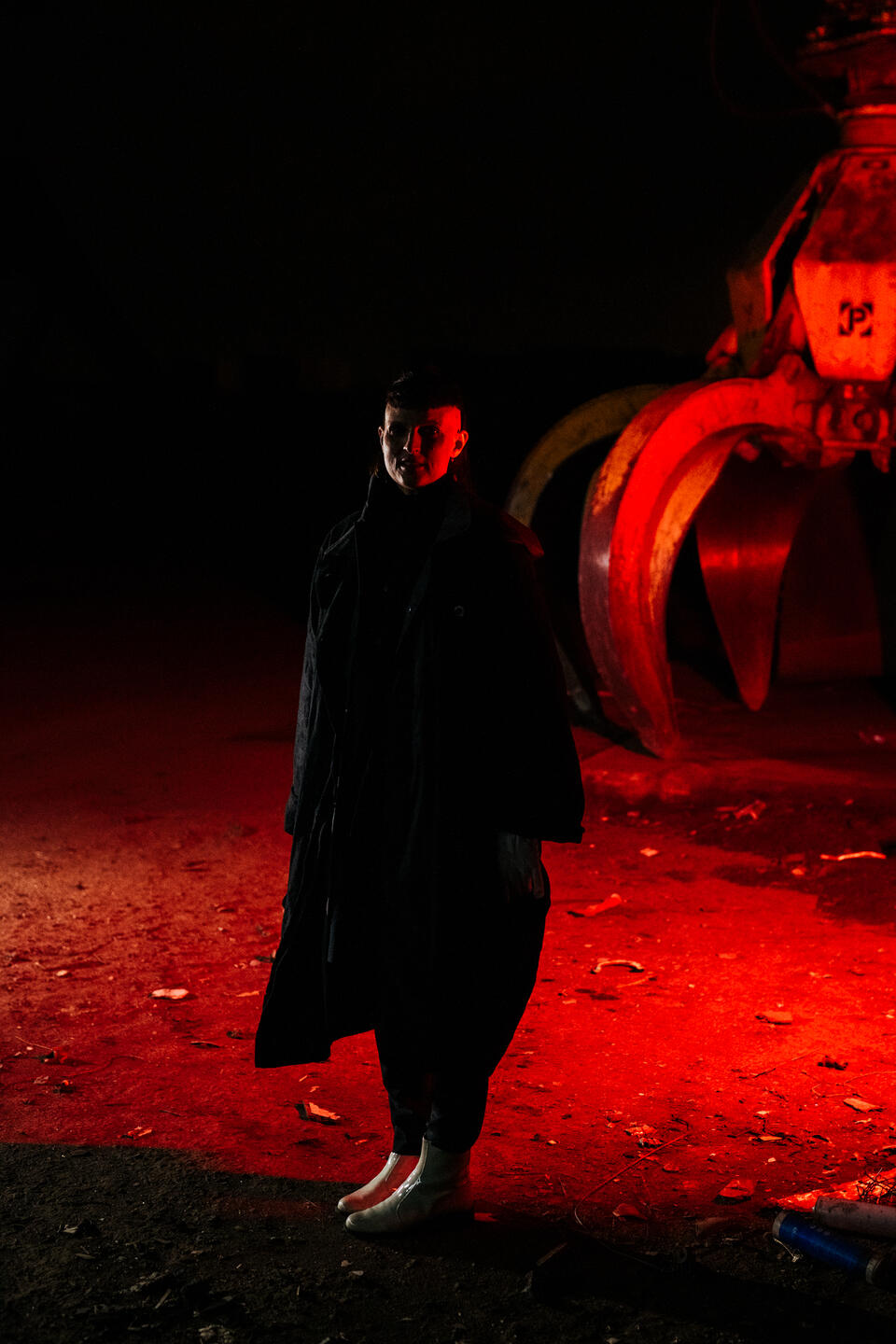
- The Performance is in work, I don't have pictures.
_SWANTJE LICHTENSTEIN writer, artist, performer, professor. Her main interests are transtextual performative amplifications of language, voice, sound and theory as well as researching electro-acustic and conceptual recordings from a transmedial and feminist perspective. She performed worldwide on different festivals and locations. Her wide range of publication work includes poetry, essays and translations. As a professor for aesthetic practices and text she teaches at the University of Applied Science in Darmstadt and has taught in several international universities and institutions.
{Empty}
Requirements
the performance is not finished yet
projector, loudspeakers
none
Níl