Secondary tabs
Submission information
Submission Number: 372
Submission ID: 441
Submission UUID: f8a79dff-8f8f-4b7b-ba07-fe5d44ad26a1
Submission URI: /ga/form/submit-contribution
Cruthaithe: Mon, 2 Mar 2026 - 13:12
Déanta: Mon, 2 Mar 2026 - 14:09
Changed: Wed, 13 May 2026 - 08:12
Remote IP address: 77.119.199.185
Submitted by: Anonymous
Teanga: English
Is draft: Níl
Current page: webform_confirmation
| Given name | Angélica |
|---|---|
| Surname | Castelló |
| castello-garnett@mdw.ac.at | |
| I understand that by submitting this form, I consent to the use of my data for the purposes of the 2026 Forum on Artistic Research'. | Tá |
| I agree to the terms of service. | Tá |
| Title | Totems — The Infinite Sadness of Small Obsolete Machines |
| Format | Experimental format |
| Main language | English |
| Abstract | Music is a social practice, often created in an interactive relationship between humans and their instruments (Cerulo 2009; Small 1997). Experienced musicians develop a close affective relation with the objects involved in musicking. These interactions between human and non-human actants can unfold into a relationship in which various social processes of negotiation, friction, and confrontation emerge (see Tatar and Pasquier 2018; Thelle and Wærstad. 2023). In contemporary electroacoustic music, the instruments often consist of micromechanical, electronic or electromagnetic technologies, which can be considered complex music systems. They are often not fully stable, transparently functional or controllable—even moody. A deep understanding of their “personalities” can give way to new forms and qualities of (artistic) expression that would otherwise remain unseen (see Borgo 2016; Guinan 2024). We, the authors of this proposal, collaborate in the artistic research project “Spirits in Complexity”. For this laboratory, we want to present our reflections on our ongoing research on the connection between machines and humans. This approach focuses more specifically on obsolete sound machines—tapes, radios, cassettes—and our relationship with them. How does this situation of fragility, this imminent threat of becoming waste, affect this interaction? The disintegration processes through which a machine reveals its materiality and structure—its truest self. Do machines have a personality? Can you experience these personalities from the interactions with them and do they change in their life span? Do you influence each other when collaborating? How do we understand them or relate to them? Do we anthropomorphise or empower them (see Young et al. 2011)? How does the use of technology change when we shift from a controlling perspective to a non-hierarchical attitude—when we include these machines as collaborators and storytellers instead (see Haraway 2016)? |
| Image |
|
| Short biographies of the presenter(s) |
|
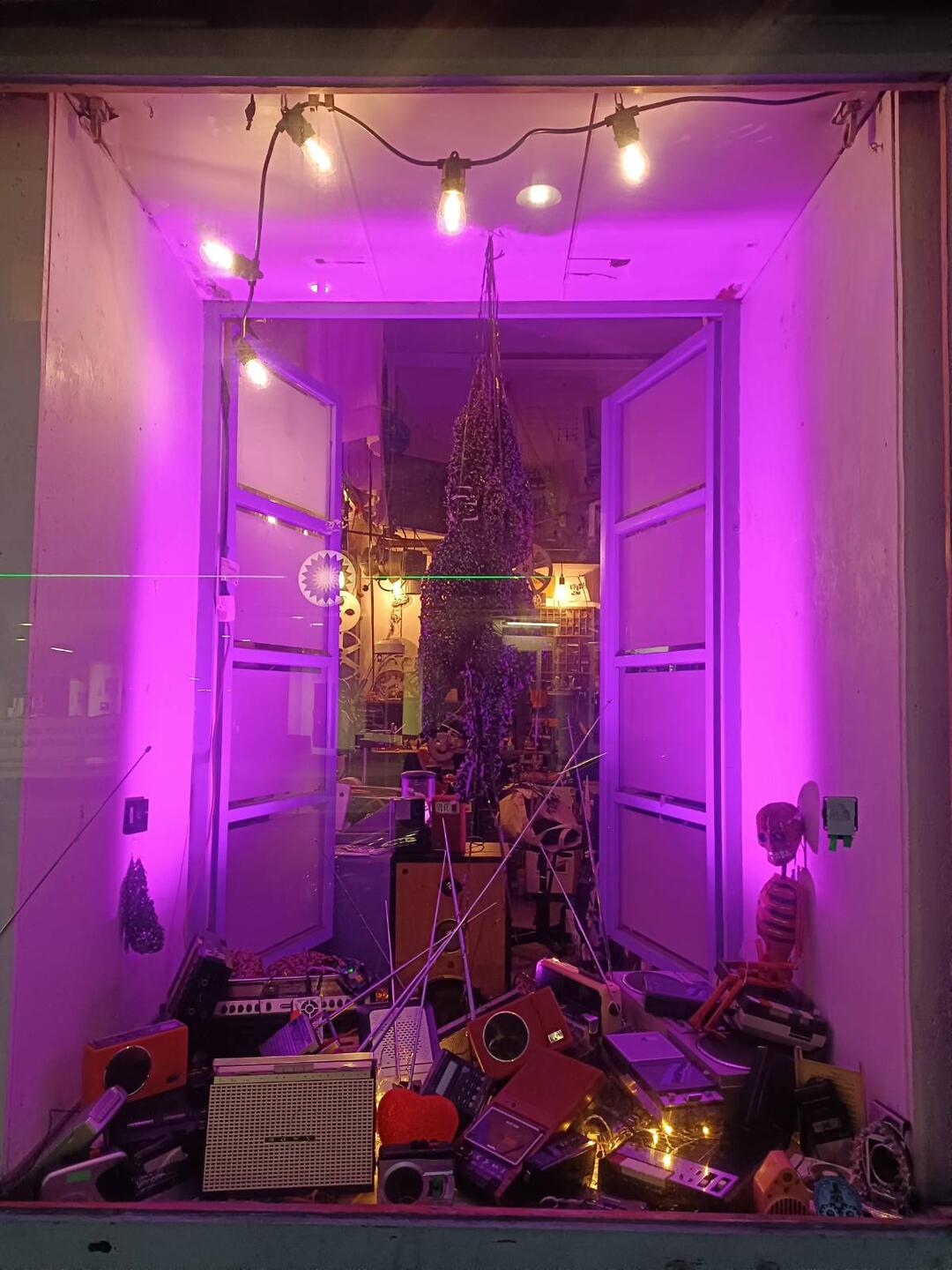
| Previous presentations or iterations of the research | The 3 principal Projects of this research by Angélica Castelló (2024 - ongoing) Totem : Discarded audio machines are reactivated as ritual sound altars, transforming technological waste into a living techno-spiritual presence. Totem Series: A concert platform where invited artists engage with the altar, exploring relational sound and making kin with machines. Un Sueño: A performance with two Revox recorders and woven tape, creating an intimate dialogue where machines act semi-autonomously. |
| Additional information | The laboratory is designed as an experimental and interactive 90-minute session that not only presents our research topic but also pursues an open, engaged discussion aligned with the themes of the conference. It begins with a performance where we reconfigure the sonic and scenographic spaces of both religious and pagan altars. Old radios, cassette players, and tapes — materials often considered obsolete — are resurrected and re-enchanted. This is followed by a brief introduction to the topic and a presentation of our research findings to date. A moderated discussion with the participants will then take place, based on a questionnaire to gather individual perspectives and associations. Finally, participants will be involved in a collaborative performance, in which the previously discussed concepts will be practically explored and implemented in the space. The space itself should be organized around the totem/altar, which serves as a spatial and conceptual point of reference. |
| Spatial and technical requirements | one table, if possible, round with a diameter of 2m (or similar); sufficient power strips |
| Potential risks or ethical concerns | none |
| Create a user account for SAR 2026 | Tá |
| Create new user | Angélica Castelló |