Secondary tabs
Submission information
Submission Number: 362
Submission ID: 429
Submission UUID: 2c30d31f-315f-46c7-b944-5555240c0553
Submission URI: /ga/form/submit-contribution
Cruthaithe: Mon, 2 Mar 2026 - 03:29
Déanta: Mon, 2 Mar 2026 - 04:25
Changed: Wed, 13 May 2026 - 08:21
Remote IP address: 73.4.98.251
Submitted by: Anonymous
Teanga: English
Is draft: Níl
Current page: webform_confirmation
Flagged: Tá
| Given name | Clareese |
|---|---|
| Surname | Hill |
| C.hill@northeastern.edu | |
| I understand that by submitting this form, I consent to the use of my data for the purposes of the 2026 Forum on Artistic Research'. | Tá |
| I agree to the terms of service. | Tá |
| Title | Cosmologies of Worldbuilding |
| Format | Experimental format |
| Main language | English |
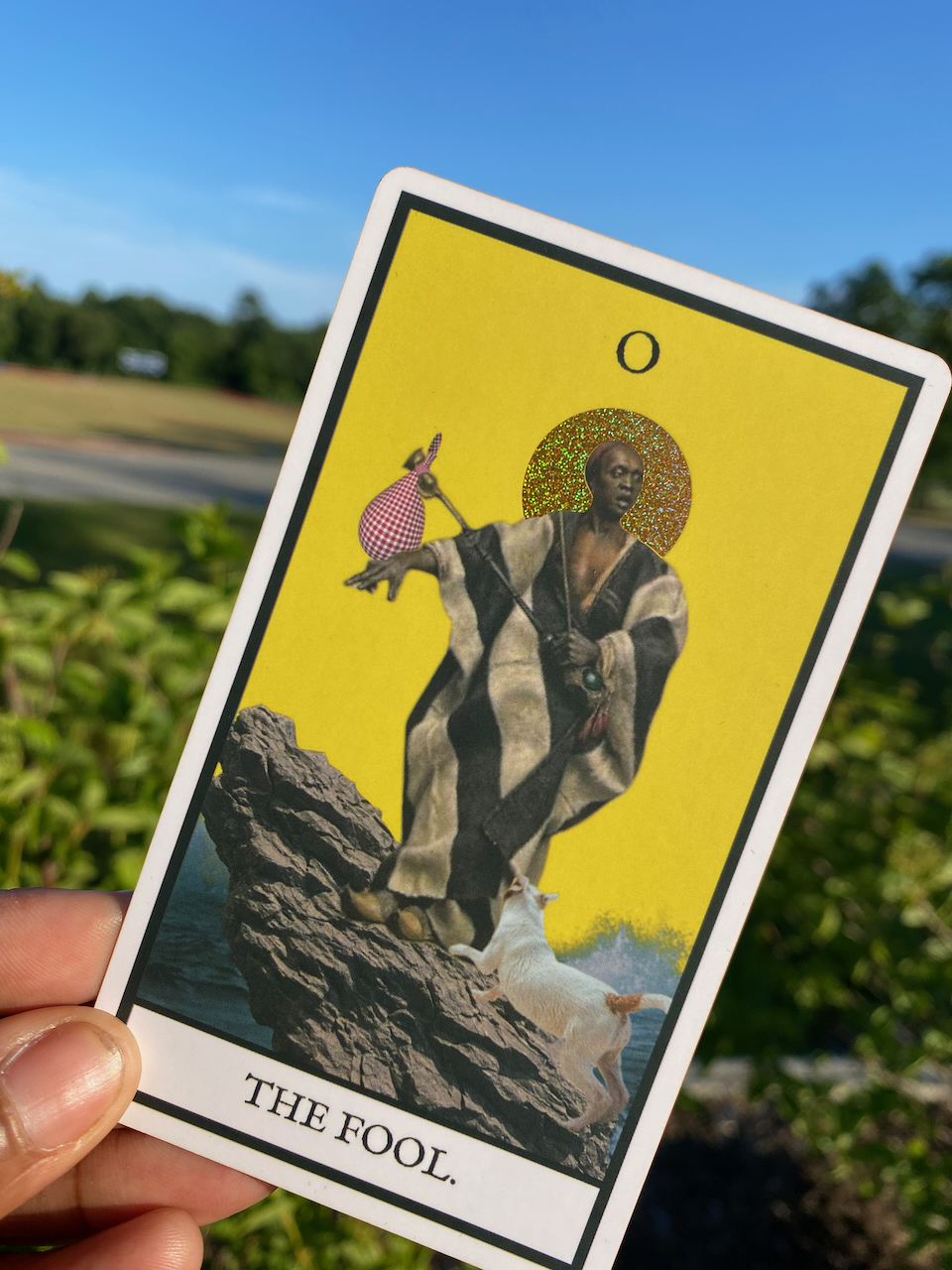
| Abstract | Researchers from the Lab of Speculative Repair propose a workshop exploring worldbuilding through divination and non-Western cosmologies. The lab is interested in worldbuilding as a pedagogical mechanism in games and how these understandings transfer into the real world. Facilitators will examine how divination technologies from African and Indigenous belief systems to tarot function as pedagogical tools that conjure a worldbuilding praxis centered on consent and speculative methods of repair. The workshop will support the development of an interactive oracle AI project and interrogate worldbuilding as a tool of repair in the design of interactive narrative XR applications. The workshop accommodates 10 to 12 self-selected participants over two hours. The lab will supply tarot decks; participants should bring large pads and writing materials. The workshop unfolds across three learning outcomes. The first explores the history of tarot, focusing on the Rider-Waite-Smith deck and its illustrator, Pamela Colman Smith, a woman of color erased from her own work until the 2009 centennial, when U.S. Games finally renamed the deck in her honor. Participants will reflect on the contributions of women of color to worldbuilding and their systematic erasure.The second outcome examines overlaps between African, African American, and Indigenous cosmologies and contemporary divination practices as forms of social worldbuilding, exploring how these traditions evolved alongside tarot through queer, Black, Indigenous, and ecologically inspired decks. The third outcome uses collective worldbuilding through active tarot reading to track what has and hasn't worked in prior worldbuilding frameworks, reconsidering speculation and the consent embedded in divination as a foundation for reimagining terraforming. The structural framework is the Kongo cosmogram, a cartographic chart from the Bakongo tradition mapping the relationality between the spirit world and the physical. |
| Image |
|
| Short biographies of the presenter(s) |
|
| Previous presentations or iterations of the research | This work has not been presented previously. |
| Additional information | |
| Spatial and technical requirements | easels, flexible space, ability to play audio and video |
| Potential risks or ethical concerns | |
| Create a user account for SAR 2026 | Tá |
| Create new user | Clareese Hill |