Secondary tabs
Submission information
Submission Number: 341
Submission ID: 407
Submission UUID: 4db6d364-47b2-4b52-907d-35ef6cc5975d
Submission URI: /ga/form/submit-contribution
Cruthaithe: Sun, 1 Mar 2026 - 19:35
Déanta: Mon, 2 Mar 2026 - 12:23
Changed: Wed, 13 May 2026 - 08:38
Remote IP address: 176.229.141.250
Submitted by: Jack Faber
Teanga: English
Is draft: Níl
Current page: webform_confirmation
Flagged: Tá
Personal Information
Your contribution
Dictionary of Darkness: Artistic Research as Post-Linguistic Knowledge
English
Dictionary of Darkness is an Artistic Research project investigating how language, technology, and perception co-produce systems of control that shape ecological, political, epistemic and endangered realities. Developed as part of the research chapter Threshold Technologies & Extinction Economies, the project examines how the supposably marginalized linguistic presence of technical vocabularies—particularly military and surveillance lexicons—operate as instruments that reorganize perception while concealing the infrastructures of planetary crisis.
Responding to the Forum’s focus on endangered conceptual worlds and minoritized knowledge systems, the project argues that infrastructural languages of power function as extractive technologies. These vocabularies standardize reality, suppress alternative epistemologies, and normalize asymmetrical relations between humans, machines, and environments. Rather than treating language as a neutral descriptive tool, Dictionary of Darkness approaches it as an operative force that produces material consequences.
The research unfolds through moving image, sound, text and montage that destabilize authoritative terminology by placing official definitions within unfamiliar sensory environments. Drawing conceptual lineage from cinematic strategies in Lessons of Darkness by Werner Herzog and philosophical propositions in Postscript on the Societies of Control by Gilles Deleuze, the work demonstrates how artistic research can translate theoretical knowledge into experiential forms that exceed linguistic discourse.
By suspending viewers between reading, listening, and sensing, the project proposes artistic research as a method for accessing forms of knowledge that cannot be fully articulated through other means alone. It suggests that rethinking how language operates—as atmosphere, architecture, and technology—is essential for sustaining conceptual diversity in an era defined by ecological degradation and informational control.
Responding to the Forum’s focus on endangered conceptual worlds and minoritized knowledge systems, the project argues that infrastructural languages of power function as extractive technologies. These vocabularies standardize reality, suppress alternative epistemologies, and normalize asymmetrical relations between humans, machines, and environments. Rather than treating language as a neutral descriptive tool, Dictionary of Darkness approaches it as an operative force that produces material consequences.
The research unfolds through moving image, sound, text and montage that destabilize authoritative terminology by placing official definitions within unfamiliar sensory environments. Drawing conceptual lineage from cinematic strategies in Lessons of Darkness by Werner Herzog and philosophical propositions in Postscript on the Societies of Control by Gilles Deleuze, the work demonstrates how artistic research can translate theoretical knowledge into experiential forms that exceed linguistic discourse.
By suspending viewers between reading, listening, and sensing, the project proposes artistic research as a method for accessing forms of knowledge that cannot be fully articulated through other means alone. It suggests that rethinking how language operates—as atmosphere, architecture, and technology—is essential for sustaining conceptual diversity in an era defined by ecological degradation and informational control.
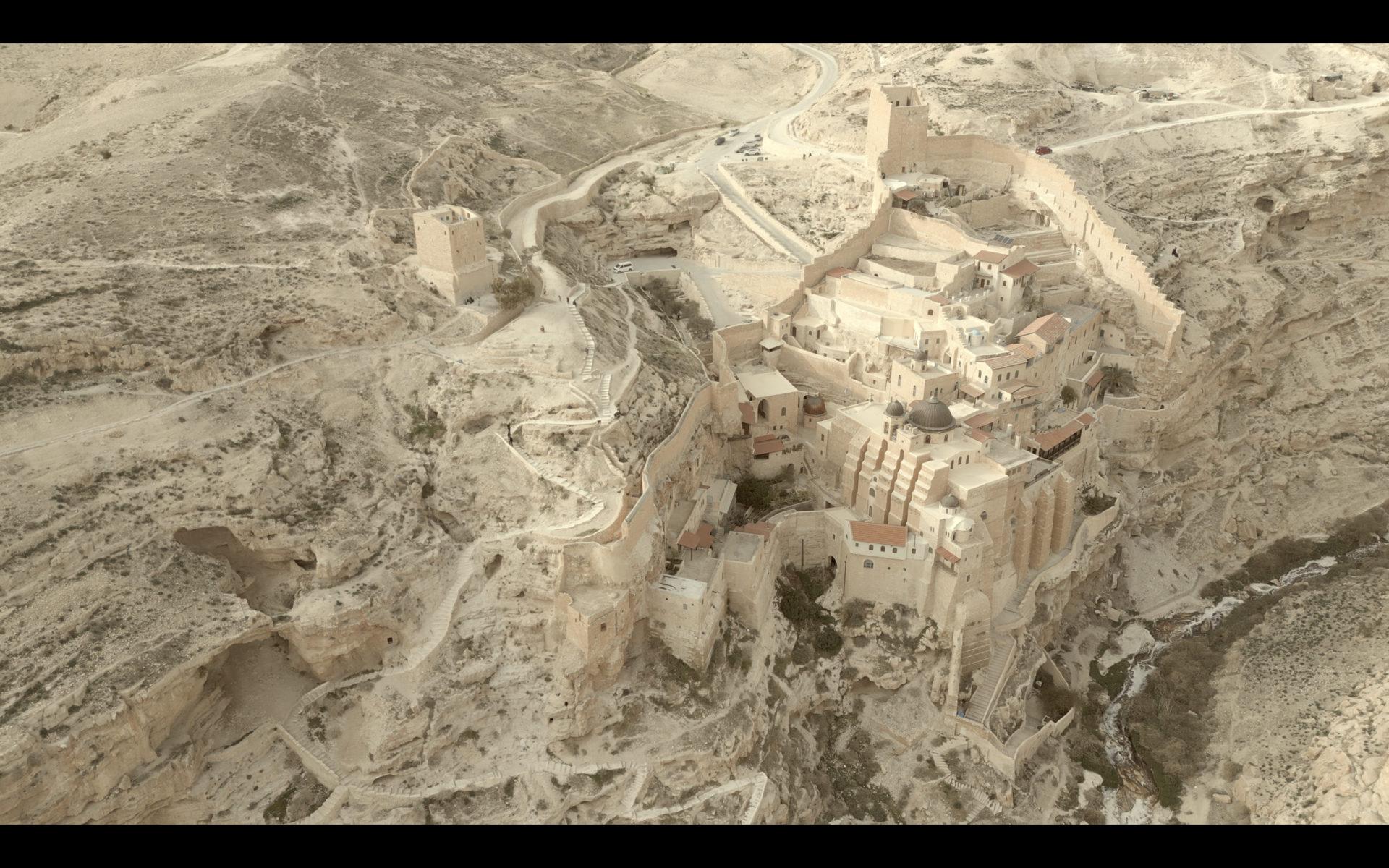
- Jack Faber is a Helsinki-based artist-researcher and filmmaker working with moving image, installation, and field-based methods. His practice examines how technological systems reshape relations between humans, environments, and other species, often focusing on contested territories and accelerated landscapes. He has received major grants from the Kone Foundation and Medienboard Berlin-Brandenburg, among others, and has presented work internationally in exhibitions, screenings, film festivals and research contexts. His projects combine artistic production with critical inquiry, using cinematic practice as a tool for investigating ecological perception, surveillance cultures, and interspecies relations.
{Empty}
Requirements
-
The presentation includes a short film screening + still images
-
Tá
Jack Faber