Secondary tabs
Submission information
Submission Number: 332
Submission ID: 398
Submission UUID: fae317fc-623d-4fc9-a867-1381809842d0
Submission URI: /ga/form/submit-contribution
Cruthaithe: Sun, 1 Mar 2026 - 18:18
Déanta: Sun, 1 Mar 2026 - 18:52
Changed: Wed, 13 May 2026 - 08:19
Remote IP address: 79.46.200.158
Submitted by: Anonymous
Teanga: English
Is draft: Níl
Current page: webform_confirmation
Flagged: Tá
| Given name | Anna Eleonora |
|---|---|
| Surname | Fabrizi |
| annafabrizi.design@gmail.com | |
| I understand that by submitting this form, I consent to the use of my data for the purposes of the 2026 Forum on Artistic Research'. | Tá |
| I agree to the terms of service. | Tá |
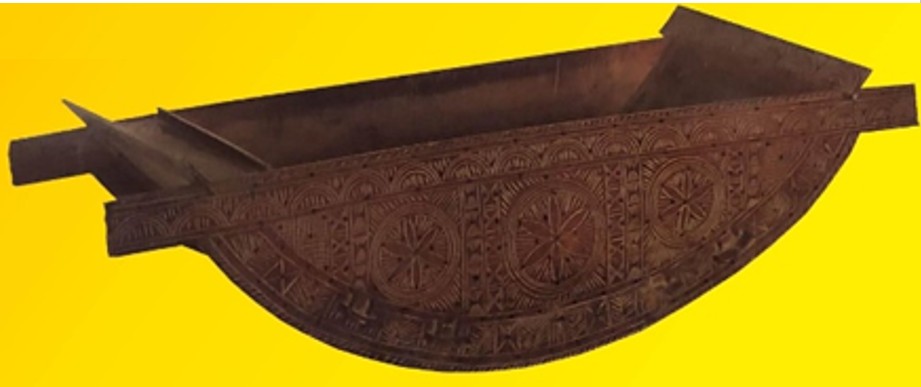
| Title | The Bratto Cradle: Can a Vernacular Object Reconnect a Dispersed Community? |
| Format | Experimental format |
| Main language | English |
| Abstract | The Bratto Cradle is a vernacular wooden cradle from a small village in Lunigiana, Tuscany - Italy. It is no longer produced, just like the other domestic objects that once made this mountain community locally known. The cradle emerged within a pastoral society in which villagers were not full-time artisans: during the winter months, shepherds produced furniture using local wood, natural pigments, and joinery techniques without nails. For the rest of the year they were engaged in other forms of labour. This made the community highly flexible, but also made the transmission of knowledge fragile, seasonal, and mostly oral.Today, only a few examples of the cradle survive. Its distinctive form appears in old paintings and traces of local memory, but no longer belongs to common artisanal practice. Its colours and symbols were also linked to protective functions, intended to ward off evil. After the Second World War, the village was gradually abandoned; many inhabitants migrated, including to London, where they carried elements of their habits and local language, known as “bratash”. The material culture that once shaped the village has become increasingly unstable and difficult to transmit.This experimental format asks whether such an object can become more than a relic. Can a vernacular object reactivate a community through artistic and productive processes? Starting from the rediscovery of the cradle, the session reflects on workshops and temporary courses already developed, in which the object became a source of inspiration for graphic works and design outcomes. Moving beyond temporary activation, the proposal asks whether the cradle can still generate artistic residencies, collective discussion, and process-based research, including reflections on biomaterials and local making. The session opens a shared inquiry into how a fragile object — rooted in oral transmission, migration, and disappearance — may still act as an epistemic resource for contemporary art. |
| Image |
|
| Short biographies of the presenter(s) |
|
| Previous presentations or iterations of the research | The present contribution is new in terms of its questions, research development, and open issues. An earlier phase of the project was addressed in a 2023 thesis at the Accademia di Belle Arti di Carrara, which documented experimental work carried out from 2019 onwards through graphic, design, and biomaterial-based practices developed in the village. |
| Additional information | This experimental format builds on an initial community-based test developed in 2019 through short courses in art, design, and graphic practices inspired by The Bratto Cradle. Those activities explored the object’s potential as a shared cultural reference within the village. The current phase expands this research through collaborations with local and international women artists, focusing on care, multi-skilled labour, and the practical knowledge once needed to live in a rural community. Particular attention is given to the fragility of memory, due to the largely oral transmission of knowledge, and to the seasonal nature of making, both historically and in the present. In partially abandoned villages, artistic and productive processes often unfold through slower and extended temporalities. The session reflects on how such conditions may still generate forms of reactivation through residencies, process-based design, and material research connected to local resources. |
| Spatial and technical requirements | A table, wall space or a pinboard/whiteboard to display and organise open questions, plus sticky notes for participants. Chairs arranged for group discussion. A projector and screen for a short visual introduction would be helpful. |
| Potential risks or ethical concerns | The project engages with local memory, vernacular knowledge, and community narratives, so particular care is given to respectful contextualisation and to avoiding extractive, reductive, or romanticised representations. The session does not require participants to share personal or sensitive data. |
| Create a user account for SAR 2026 | Tá |
| Create new user | Anna Eleonora Fabrizi |