Secondary tabs
Submission information
Submission Number: 298
Submission ID: 363
Submission UUID: 355ea0ab-9033-49f2-b186-04c6009b3507
Submission URI: /ga/form/submit-contribution
Cruthaithe: Sun, 1 Mar 2026 - 09:33
Déanta: Sun, 1 Mar 2026 - 10:24
Changed: Wed, 13 May 2026 - 08:14
Remote IP address: 212.166.223.110
Submitted by: Anonymous
Teanga: English
Is draft: Níl
Current page: webform_confirmation
| Given name | Sofia |
|---|---|
| Surname | Malacalza San Martin |
| sofimalacalza@hotmail.com | |
| I understand that by submitting this form, I consent to the use of my data for the purposes of the 2026 Forum on Artistic Research'. | Tá |
| I agree to the terms of service. | Tá |
| Title | Sonic Collage: A video-mapping exploration of amateur electronic music and sound artists relations with audio technologies. |
| Format | Performance |
| Main language | English |
| Abstract | In music composition, women, queer, and non-normative bodies often face marginalization, mirroring patterns seen in predominantly white male-dominated fields. This Art-based research unearths the creative ideas and composition processes of six female and LGBTQIA+ amateur electronic music and sound practitioners. It explores the potential of electronics as a liberating medium, echoing Laurie Spiegel's statement, and examines whether this technological usage can be deemed as a good technology. Employing friendship-as-a-method for qualitative interviews, and thematic analysis for data comprehension, the research show that community support is crucial for unlocking artistic potential and countering gender biases in music technology. Also highlight that these music practice empowers individuals to express personal narratives and artistic self-discovery. The analysis of the interviews reveals progress towards gender balance in European counterculture but persistent gendered hierarchies challenge true equality, emphasizing the ongoing struggle for representation and diversity in technical roles. The dissemination of project embraces avant-garde aesthetics. Through video mapping techniques, research extends beyond academic boundaries, sparking dialogues on gender and technology. |
| Image |
|
| Short biographies of the presenter(s) |
|
| Previous presentations or iterations of the research | This project originated from a master's thesis presented in July 2024 at UPF University in Barcelona, as part of the Master in Digital Culture and Emerging Media. It will be showcased at the Gender Sound 2026 event organized by ESMUC in Barcelona, in March 2026 The installation was created to be showcased at audiovisual events or any gatherings focusing on gender, technology, and music, including museums and educational institutions. |
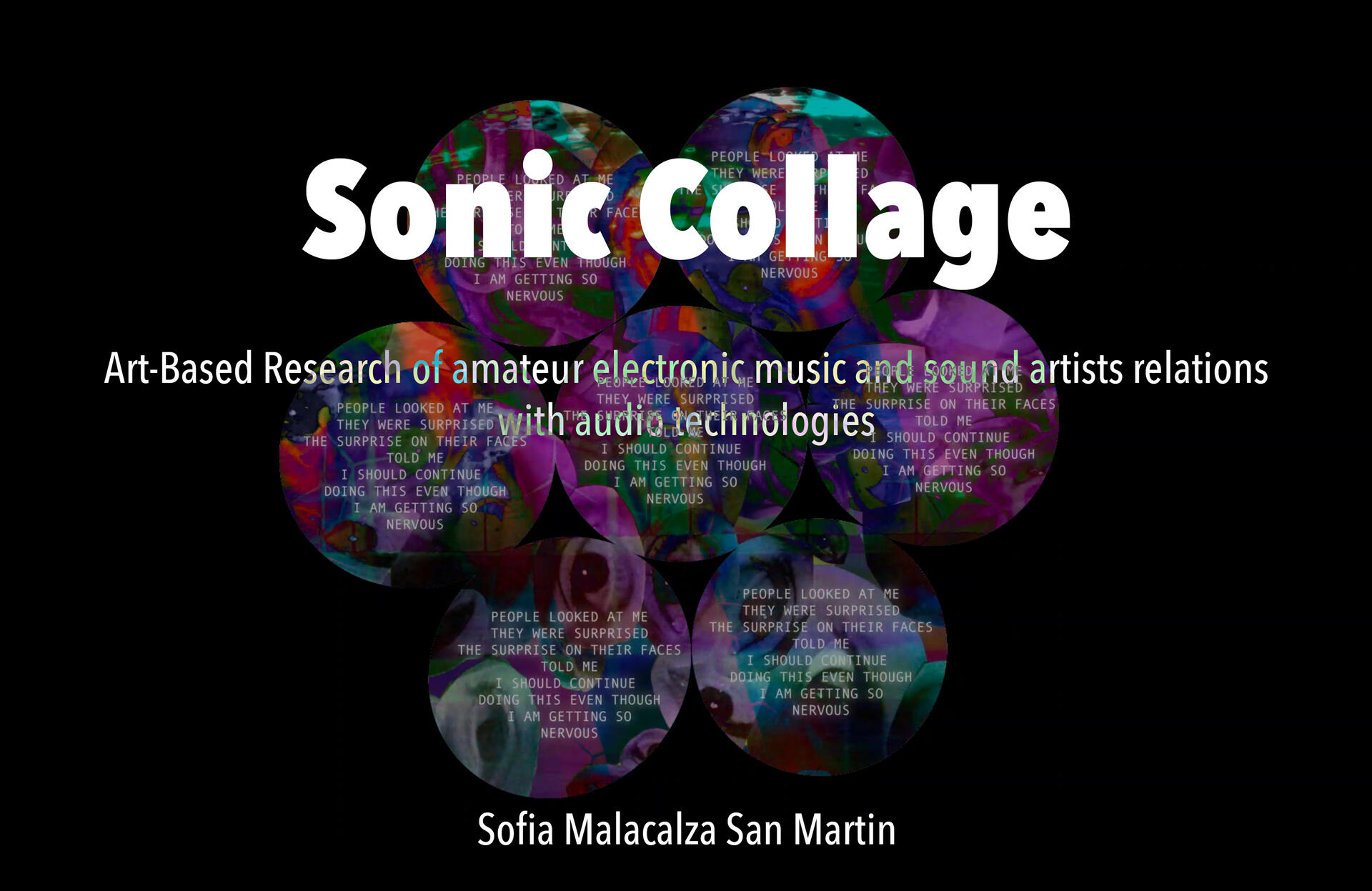
| Additional information | The artistic creation is a video-mapping piece that seamlessly integrates audio and images provided by the participants with videos, animations, and glitch effects crafted by the researcher. These elements are inspired by the interviews, themes, and visual concepts shared by participants, offering a unique portrayal of their music creation process. After deriving themes from the interviews and analyzing the results, the creative process begins to develop an installation that narrates the participants' stories. I opted to weave a single narrative from all the interviews, identifying common threads in their experiences as music creators and intertwining them to form a cohesive story. Each theme is represented by two quotes from different participants in the audio, carefully selected to encapsulate ideas shared by all participants. Visual elements enhance the audio and text from the interviews, making the story more engaging and accessible to the audience. |
| Spatial and technical requirements | Video projector: High-definition resolution HDMI cable: Length sufficient to connect the projector to a personal laptop Power station for laptop. Location near projection area Display structure: 1 m² structure made out of vinyls, with a weight of approximately 1.5kg Appropriate distance between the projector and display structure for optimal image size. Floor space to accommodate the 1 m² structure. Capacity to manage ambient light |
| Potential risks or ethical concerns | Music creation is viewed solely as a form of expression separate from the cultural industry, with participants earning their income from other sectors, suggesting the need for further research. The constraints of conducting a small-scale research study, alongside the utilization of friendship-as-a-method, pose challenges in amplifying the voices of a more diverse range of female and LGBTQAI+ DJs and composers. This limitation restricts the breadth of perspectives encompassed within the study. |
| Create a user account for SAR 2026 | Tá |
| Create new user |