Secondary tabs
Submission information
Submission Number: 283
Submission ID: 347
Submission UUID: 0180c430-a717-47f8-a454-f42886ee7945
Submission URI: /ga/form/submit-contribution
Cruthaithe: Sun, 1 Mar 2026 - 03:21
Déanta: Sun, 1 Mar 2026 - 04:03
Changed: Wed, 13 May 2026 - 08:14
Remote IP address: 74.141.163.161
Submitted by: Anonymous
Teanga: English
Is draft: Níl
Current page: webform_confirmation
Personal Information
Your contribution
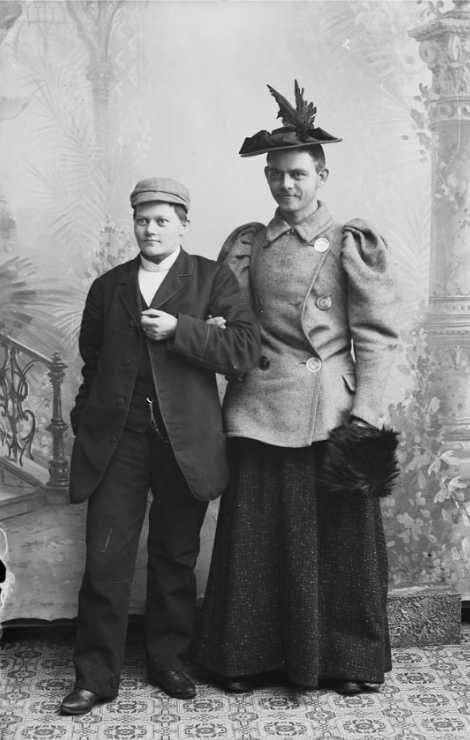
“PRIVATE”- MARIE HØEG & BOLETTE BERG: NON-CATHARSIS AS AN ETHICS OF OPACITY
English
This paper examines Marie Høeg's photographic practice with Bolette Berg as exemplifying what I term a non-cathartic methodology, an approach to art-making and viewing that refuses the therapeutic imperative dominating Western aesthetic discourse since Aristotle. This is a decidedly feminist, anti-hegemonic, and gender-liberatory perspective. Høeg's sartorial performances, captured in photographs never intended for public circulation, operate according to logics fundamentally at odds with confessional, or trauma-processing models of creative practice. Rather than seeking emotional purgation, narrative resolution, or the transformation of suffering into transcendent meaning, these images remain deliberately encrypted, withholding themselves from interpretive mastery while preserving generative contradictions and sustaining productive irresolution.
Through close analysis of Høeg's photographs as well as her decision to keep these images private, I argue that her creative oeuvre enacts what Édouard Glissant terms in his text, Poetics of Relation "the right to opacity"; an ethical refusal of the demand that marginalized subjects render themselves legible within normative frameworks (Glissant 189-94). This withdrawal from circulation combined with her anarchic and joyful collaboration constitutes a defiant stance. Therefore her archive should not be read as closeted concealment but rather as a strategic refusal of visibility, which functions as a disciplinary technology enforcing compulsory gender norms. Her images and studio practice thus constitute a counter-public enclave. Here, alternative embodiments remain accountable only to the maker's immediate experiential needs, refusing orientation toward external validation or political legibility. This paper presents a critical methodological intervention in how we recover and interpret women's photographic practices.
Through close analysis of Høeg's photographs as well as her decision to keep these images private, I argue that her creative oeuvre enacts what Édouard Glissant terms in his text, Poetics of Relation "the right to opacity"; an ethical refusal of the demand that marginalized subjects render themselves legible within normative frameworks (Glissant 189-94). This withdrawal from circulation combined with her anarchic and joyful collaboration constitutes a defiant stance. Therefore her archive should not be read as closeted concealment but rather as a strategic refusal of visibility, which functions as a disciplinary technology enforcing compulsory gender norms. Her images and studio practice thus constitute a counter-public enclave. Here, alternative embodiments remain accountable only to the maker's immediate experiential needs, refusing orientation toward external validation or political legibility. This paper presents a critical methodological intervention in how we recover and interpret women's photographic practices.
- Amy Schuessler is an artist, writer, and scholar living in Columbus, Ohio. She holds a BFA in photography with a minor in art history from Columbus College of Art & Design and an MFA from Image/Text Ithaca, housed within Cornell Department of Fine Art. She is currently a Ph.D. candidate at the Institute for Doctoral Studies in the Visual Arts, studying at the intersection of philosophy and aesthetics. As well as her creative and academic endeavors, Amy is the Executive Gallery Director at ROY G BIV Gallery for Emerging Artists, a non-profit organization. She also teaches philosophy and art history at Columbus College of Art & Design and The Ohio State University.
{Empty}
Requirements
Powerpoint Slide Deck
Powerpoint Slide Deck
{Empty}
Tá
Amy Schuessler