Secondary tabs
Submission information
Submission Number: 281
Submission ID: 344
Submission UUID: c36fd75d-7e13-4067-81cc-e2676cf82810
Submission URI: /ga/form/submit-contribution
Cruthaithe: Sun, 1 Mar 2026 - 01:09
Déanta: Sun, 1 Mar 2026 - 05:41
Changed: Wed, 13 May 2026 - 08:26
Remote IP address: 187.189.146.189
Submitted by: Anonymous
Teanga: English
Is draft: Níl
Current page: webform_confirmation
Flagged: Tá
| Given name | Sara |
|---|---|
| Surname | Gómez |
| saragomez74@yahoo.com.mx | |
| I understand that by submitting this form, I consent to the use of my data for the purposes of the 2026 Forum on Artistic Research'. | Tá |
| I agree to the terms of service. | Tá |
| Title | Gesture as a construction technique |
| Format | Project presentation |
| Main language | English |
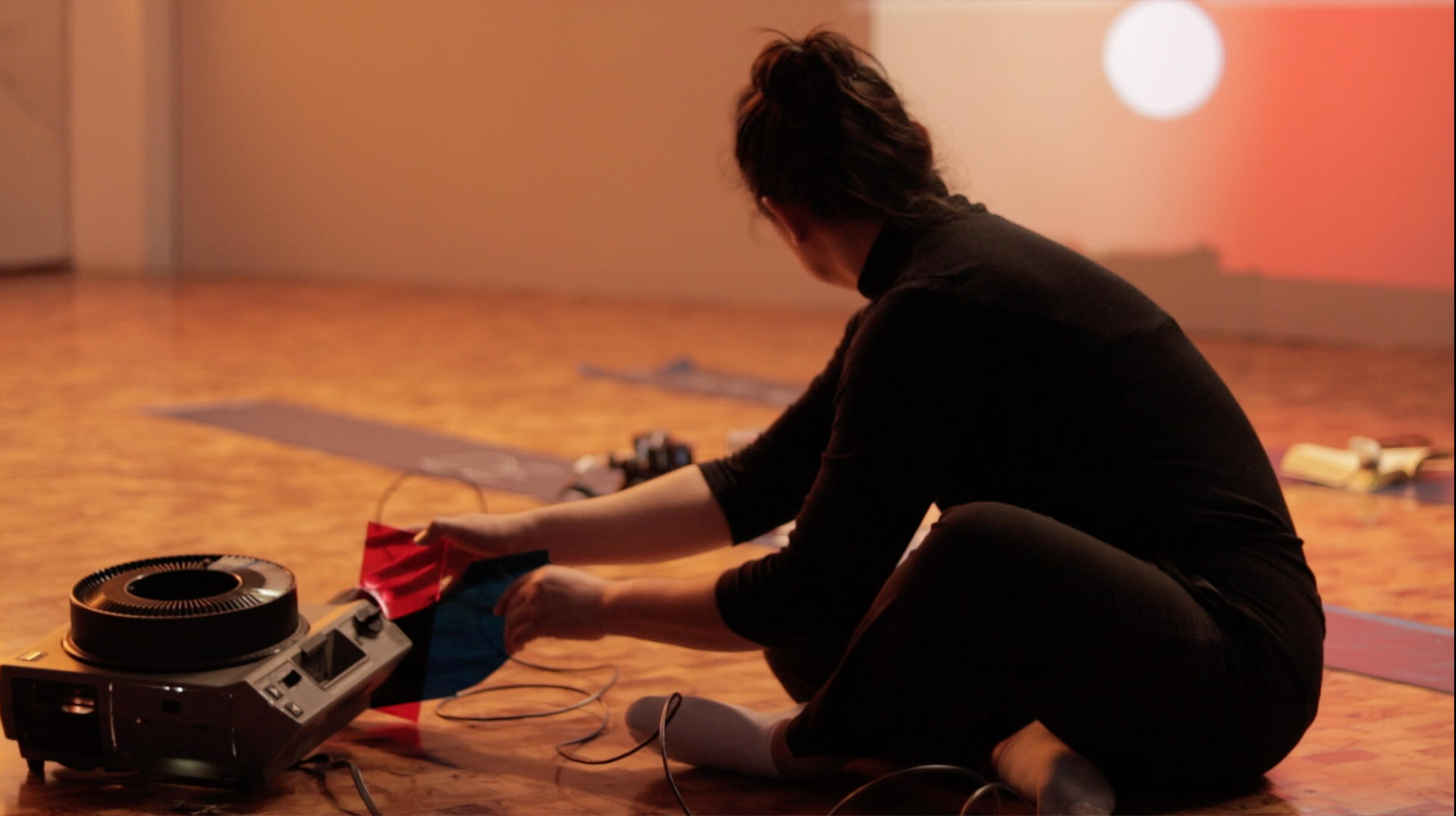
| Abstract | Through a performative lecture (20 to 25 min.) I will present my current postdoctoral research in which I seek to define the term choreographic aesthetic apparatus. To do it, I must ask whether choreography has the capacity to reveal something unintelligible through its aesthetic production. I maintain that a structure of meaning is created through the gesture. Gesture can be understood here as the technique by which one element is joined to another -object to body, gesture to words. That union is not only formal but related to meaning: if each object has multiple meanings (due to its linguistic and cultural dimensions), the gesture creates heterogeneous meanings through the union between several objects; an assemblage is created through contradictions (Rancière) between concepts and symbols. Choreographic construction unfolds a thought that is ordered on the stage (P. Valéry). Thought must unite emotion and intellect because it is not reduced to the production of knowledge, it is something more comprehensive: integrates ways of knowing the world (E. Kant). Choreography could be an aesthetic apparatus if it offers us ways of thinking (in an integral way), aspects that have not been ordered in intelligible processes. In a performative lecture I propose to work on the following problems: the creation of meanings through the gesture of uniting things; the relationship between choreography with the concept of construction (V. Fabbri, W. Benjamin, J. L. Déotte); a choreographic final meaning that offers an integral way of thinking. The way I will address this is by sharing a reflective text while working with diverse objects (things, books, letters, images, writings), exploring their possible relationships, and leaving a trail of their unions in the space. With all of these I will form an (choreographic and spatial) utterance that articulates and makes visible the main idea: the ephemeral but visible construction of the choreography through gestures. |
| Link to the Exposition | https://www.researchcatalogue.net/shared/9cc418a578a743f9094178080088f8d6 |
| Image |
|
| Short biographies of the presenter(s) |
|
| Previous presentations or iterations of the research | I created a performative lecture (10 min) related to my postdoctoral research for the 4th International Congress on Dance Research (Mexico). That work is the starting point for creating the performative lecture proposed here, but it will be center in developing the aesthetic problems mentioned above (that I've just begun to research). I’m publishing a chapter in Dance and Philosophy by Nicolasa ed. (currently in press), named “On Eros and Episteme” that is also related with my current research. |
| Additional information | My proposal, although it is a performative lecture, and takes advantage of the format of a traditional lecture, requires an open space and some technical specifications. |
| Spatial and technical requirements | Stage: empty space (4m x 5m). Chairs or cushions around it. Dimmable lighting (if possible) Possibility of darkening the room for projection Projector Space for projection (2.10 m high x 3 m wide if possible) Possibility to rehearsal on the assigned room for one hour, before the presentation day. Possibility of preparing the space 30 minutes before the presentation, on the presentation day. |
| Potential risks or ethical concerns | |
| Create a user account for SAR 2026 | Tá |
| Create new user |