Secondary tabs
Submission information
Submission Number: 10
Submission ID: 34
Submission UUID: 2377c838-fc4f-42d1-beb8-965941397567
Submission URI: /ga/form/submit-contribution
Cruthaithe: Mon, 19 Jan 2026 - 08:59
Déanta: Mon, 19 Jan 2026 - 10:22
Changed: Wed, 13 May 2026 - 08:51
Remote IP address: 94.139.28.85
Submitted by: Anonymous
Teanga: English
Is draft: Níl
Current page: webform_confirmation
Flagged: Tá
Personal Information
Your contribution
When “Essay” Becomes a Template: The Endangered Conceptual World of Essayistic Research
English
In current academic and cultural circulation, the term “video essay” has become a dominant label for short-form audiovisual scholarship. Yet many works that circulate under this name reproduce the architecture of the academic paper: a pre-scripted thesis, linear argumentation, signposted claims, and conclusory takeaways in which images primarily function as illustration. This paper argues that such practices do not simply represent a stylistic variation of the essay. They constitute a methodological displacement. What is increasingly produced is an audiovisual paper rather than an essay in the philosophical sense. Here the essay is understood as a non-identitarian mode of inquiry that proceeds through constellation, montage, and problematisation, refuses final definitions, and treats concepts as provisional in relation to the object.
I propose that this terminological drift is not neutral. Under conditions of platform optimisation and institutional evaluation regimes, essayistic inquiry becomes difficult to recognise and therefore difficult to sustain. The essay’s capacity to hold uncertainty, to think by juxtaposition rather than deduction, and to generate knowledge without closure is flattened into standardised templates of “explain, prove, conclude.” Framed through the conference theme of endangered conceptual worlds, I treat “the essay” as a fragile conceptual practice whose specificity is pressured by academic instrumentalisation and narrative standardisation.
Methodologically, the presentation develops a compact typology distinguishing audiovisual papers from essayistic audiovisual research. It also proposes criteria for evaluation that protect essayistic method within artistic research contexts. The aim is not to police a genre. It is to clarify terms, recover methodological possibilities lost in current usage, and reopen space for essayistic practices that can function as genuine research without being forced into the paper’s demonstrative logic.
I propose that this terminological drift is not neutral. Under conditions of platform optimisation and institutional evaluation regimes, essayistic inquiry becomes difficult to recognise and therefore difficult to sustain. The essay’s capacity to hold uncertainty, to think by juxtaposition rather than deduction, and to generate knowledge without closure is flattened into standardised templates of “explain, prove, conclude.” Framed through the conference theme of endangered conceptual worlds, I treat “the essay” as a fragile conceptual practice whose specificity is pressured by academic instrumentalisation and narrative standardisation.
Methodologically, the presentation develops a compact typology distinguishing audiovisual papers from essayistic audiovisual research. It also proposes criteria for evaluation that protect essayistic method within artistic research contexts. The aim is not to police a genre. It is to clarify terms, recover methodological possibilities lost in current usage, and reopen space for essayistic practices that can function as genuine research without being forced into the paper’s demonstrative logic.
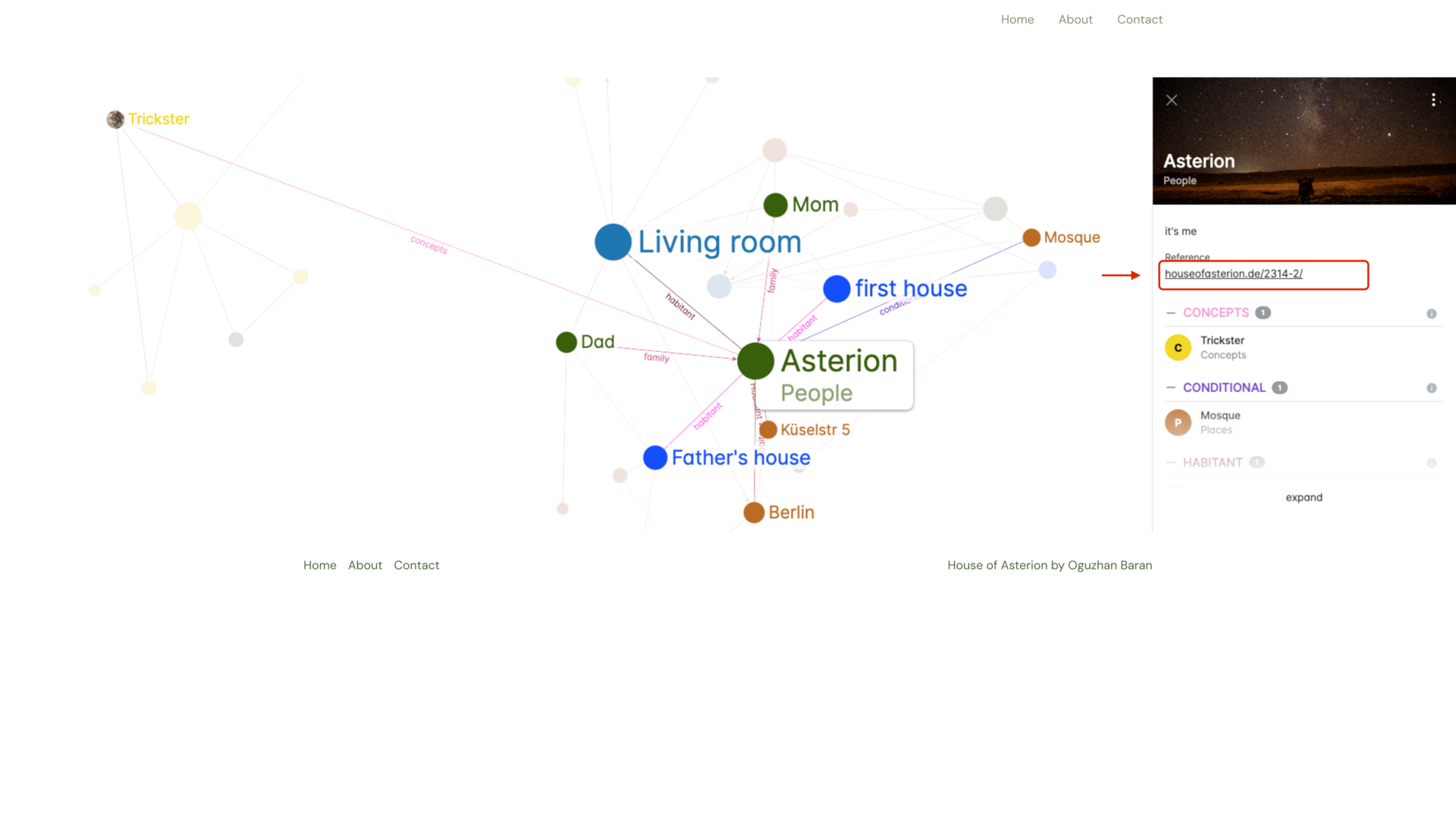
- Oguzhan Baran is a scientific-artistic researcher and PhD candidate at Filmuniversität Babelsberg KONRAD WOLF. He holds an MSc in Media and Cultural Studies from Middle East Technical University (METU), where he also worked as a research assistant and at the Audiovisual Research Center. His research explores the relations between memory, space, and affect through essay film and rhizomatic mapping.
-IKF 33rd Transdisciplinary Colloquium (25 Nov 2025): The Essay in Artistic Research Strategies (discussion/moderation).
-Catalyst Postgraduate Symposium 2025 (Berlin): “The House of Asterion: Rhizomatic Mapping for Tracing Affective Intensities in Space”
-ZeM Forum 2025 (Potsdam): “The House of Asterion: Rhizomatic Mapping as Method”
-P+ARTS 2025 (Naples): PhD Forum poster/proceedings “The House of Asterion: Rhizomatic Mapping as Method”
-Catalyst Postgraduate Symposium 2025 (Berlin): “The House of Asterion: Rhizomatic Mapping for Tracing Affective Intensities in Space”
-ZeM Forum 2025 (Potsdam): “The House of Asterion: Rhizomatic Mapping as Method”
-P+ARTS 2025 (Naples): PhD Forum poster/proceedings “The House of Asterion: Rhizomatic Mapping as Method”
Requirements
My contribution will be a 20-minute peer-reviewed presentation with a short guided walkthrough of a newly created Research Catalogue exposition (approx. 15 minutes to navigate). I will introduce a distinction between “audiovisual papers” and essayistic audiovisual research and propose practical criteria for evaluation that protect essayistic method (constellation/montage, non-closure, problematisation, and the productive role of uncertainty). The presentation will include 1–2 brief audiovisual excerpts (under 2 minutes total) and will conclude with questions for collective discussion (10 minutes).
Standard lecture room setup
• Projector or large display + HDMI/USB-C connection
• Audio playback via room speakers (stereo)
• Internet/Wi-Fi access (for Research Catalogue exposition)
• Presenter laptop (can be own)
• Projector or large display + HDMI/USB-C connection
• Audio playback via room speakers (stereo)
• Internet/Wi-Fi access (for Research Catalogue exposition)
• Presenter laptop (can be own)
• The project draws on autoethnographic memory, including family histories and potentially sensitive biographical material.
• Some media (photos/video/voice) may include identifiable individuals; where needed, consent will be obtained, identities anonymised/blurred, and private details withheld.
• References to politically and socially sensitive contexts (e.g., migration, class, conflict) will be handled with care to avoid harm, stereotyping, or unintended exposure.
• Some media (photos/video/voice) may include identifiable individuals; where needed, consent will be obtained, identities anonymised/blurred, and private details withheld.
• References to politically and socially sensitive contexts (e.g., migration, class, conflict) will be handled with care to avoid harm, stereotyping, or unintended exposure.
Tá
Oguzhan Baran