Secondary tabs
Submission information
Submission Number: 269
Submission ID: 331
Submission UUID: 58dc104f-2cab-4794-addc-ac7b58131e1a
Submission URI: /ga/form/submit-contribution
Cruthaithe: Sat, 28 Feb 2026 - 21:57
Déanta: Sat, 28 Feb 2026 - 22:03
Changed: Wed, 13 May 2026 - 08:12
Remote IP address: 89.186.159.123
Submitted by: Anonymous
Teanga: English
Is draft: Níl
Current page: webform_confirmation
Personal Information
Your contribution
Bodies in Resonating Action: Composing from the Body
English
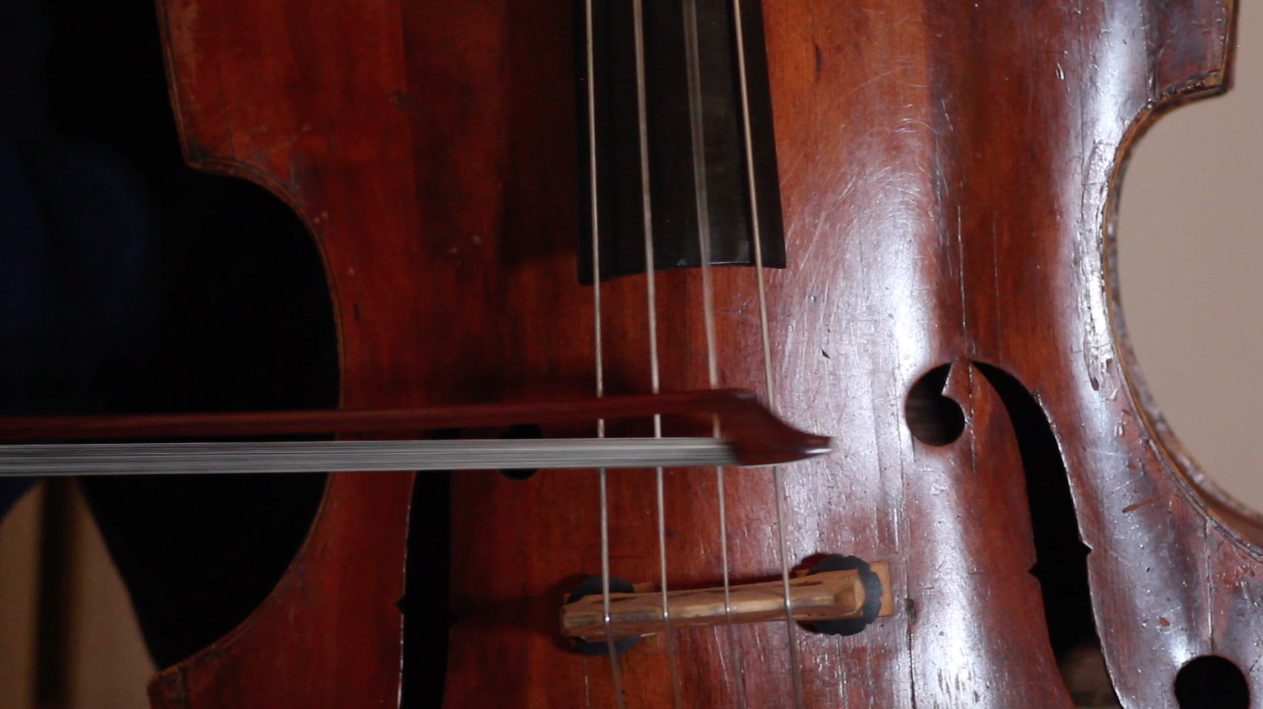
Music-making begins with the body’s action ranging from the visible and grand to the imperceptible and subtle. Yet in modern times, the physicality of making music has been overshadowed by an obsession with sound and with the work of art as an object detached from human making and interaction. The research project Bodies in Resonating Action explores the potential of the musician’s body and its processes as compositional material. It is developed for and through the specific body of the collaborative performer, adapting and investigating concepts while taking into consideration the specificity and uniqueness of each performer’s soma. The fundamental idea of the project is to move away from pitch, rhythm, and rigid structure as the primary elements of music, and to focus instead on physical processes such as bodily motion, breathing, mental intention, and embodied awareness in the interaction with sound production, and investigate how these can systematically form a novel way of understanding and structuring music-making. In order to do so, the project incorporates concepts from music and movement practices outside Western art music and beyond Western culture broadly. It does not aim to create composed pieces as fixed objects, but rather a way of music-making, thinking, musically behaving that results in performance material in a constant process of transformation. The development of a unique notational system within this framework serves neither a descriptive nor a prescriptive role; it rather accompanies the research’s thinking process and traces the development of its key concepts. It is not intended as material for reproduction, but as a map and communicative tool for the collaborative musician. There is therefore a strong element of oral transmission, which functions alongside or even prior to notation rendering the composer’s presence inevitable in the practice and situating the material as dependent on the people involved in its making.
- Faidra Chafta Douka is a Berlin-based composer and researcher. She studied composition and experimental music theatre at the Aristotle University of Thessaloniki, the Hochschule für Musik Dresden and the Universität der Künste Berlin. Since 2019 she is a Doctoral candidate for artistic research at the Kunstuniversität in Graz and ZHdK in Zürich. Her artistic activity includes instrumental, music theatre and performance pieces often exploring process, repetition and the poetry deriving from the captured fictional frame of a live performance.
“Forum Artistic Research”, GMPU Klagenfurt June 2024
“Feedback Constellations” ZHdK Zurich November 2024
“Feedback Constellations” ZHdK Zurich November 2024
Requirements
{Empty}
Audio and video.
{Empty}
Níl