Secondary tabs
Submission information
Submission Number: 259
Submission ID: 320
Submission UUID: efa7329b-3b38-4f16-986b-0d657bf68991
Submission URI: /ga/form/submit-contribution
Cruthaithe: Sat, 28 Feb 2026 - 20:13
Déanta: Sat, 28 Feb 2026 - 20:18
Changed: Wed, 13 May 2026 - 08:14
Remote IP address: 149.115.36.130
Submitted by: Anonymous
Teanga: English
Is draft: Níl
Current page: webform_confirmation
| Given name | Manuela |
|---|---|
| Surname | Rosso - Brugnach |
| manuela.rossobrugnach@ubc.ca | |
| I understand that by submitting this form, I consent to the use of my data for the purposes of the 2026 Forum on Artistic Research'. | Tá |
| I agree to the terms of service. | Tá |
| Title | Between Wor(l)ds: Translingual Methods for Reimagining Water |
| Format | Workshop |
| Main language | English |
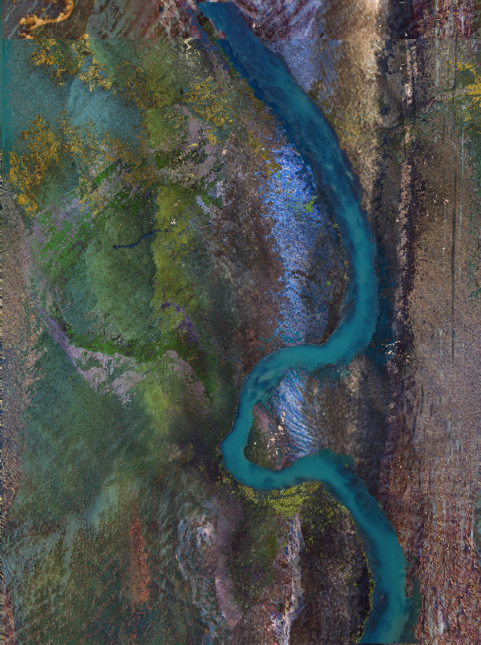
| Abstract | As border-crossing entities, both language and water are polylocal. As languages migrate, travel, mobilize, and transform, speech communities sedimenting voices across environments, waters surge, seep, re-route and cycle, crossing hydrosocial territories and jurisdictional partitions. Yet the governance of transboundary waters, paradoxically, also requires levels of agreement on what makes up a better way forward in the face of increasing scarcity, language loss, pollution, and uneven water realities—one of the most urgent challenges of the twenty first century (Castro 2007; Norman & Bakker 2015). While water governance approaches such as Integrated Water Resource Governance (IWRG) and Adaptive Water Resource Governance (AWRG) offer important groundwork, less attention has been paid to language practices that navigate the ongoing translations at the interplay between fluidity, flux, fixity, and the situated, ontological legibility of the hydrocommons (Neimanis, 2018; Buenafe et al 2024): what much artistic commons research has called ‘emplaced relational translation’ (Imhoff and Quirós 2015; De Carli et al 2025). Thinking with these challenges, this workshop—inspired by Franch I Gilabert, Luzárraga, and Muiño’s 100 Words for Water (2025) and by Simon on translation’s border-work (2019)—invites participants to choose a water body, write from their embodied relation to it, and translate it through a quick collective assemblage (re-voicing across languages and senses) before coining a new “water word” for a shared mini-glossary by the end. Sharing is optional; no recording; any traces enter a consent-based ethical archive by explicit choice. |
| Image |
|
| Short biographies of the presenter(s) |
|
| Previous presentations or iterations of the research | Builds from the project’s planned workshop with multilingual water researchers and the proposal’s theoretical and methodological framework; This workshop will have been piloted in a peer-reviewed rendition as part of my PhD comprehensive examinations, workshopped with Dr. Christine Schreyer, Dr. Denise Kenney, Dr. Leila Harris, and Dr. Astrida Neimanis at the University of British Columbia in April 2026. Feedback from this committee-supported iteration will inform the SAR2026 version. |
| Additional information | This 90-minute workshop is practice-based and participant-led. After a brief framing, participants will (1) select a specific water body, (2) write a short “water note” grounded in embodied and situated experience, (3) have the note re-voiced by others through a rapid translation-as-assemblage exercise (across languages and/or registers such as memo/poem/testimony), and (4) coin and define one new “water word.” The session culminates in a collectively produced mini-water glossary. No specialist water knowledge is required. Participants do not need to be multilingual: translation can be interlingual where possible, or intra-lingual through register shifts and re-voicing within the same language. Sharing is optional throughout; quiet participation is supported. Ethical protocol: no recording/photography; paper traces are retained only by explicit opt-in consent and otherwise collected and destroyed after the session. Scales from 4–6 participants up to ~20. |
| Spatial and technical requirements | Seminar room with movable seating, suitable for groups from 4–6 up to ~20. Setup: circle for opening/closing + small-group clusters. 1–6 tables/desks (depending on group size) for writing/assemblage. Materials: A4/letter paper and pens; optional simple collage supplies (sticky notes, tape/glue sticks, markers; scissors optional). Accessibility: all activities can be done seated. Internet preferred; no recording equipment used. |
| Potential risks or ethical concerns | Foreseeable risks are low but include participants sharing sensitive experiences linked to water, or inadvertently naming identifiable people/communities in contested contexts. Sharing is voluntary; participants may write abstractly and are asked to avoid identifying details. No recording/photography. Any paper traces are kept only by explicit opt-in consent; otherwise collected and destroyed. |
| Create a user account for SAR 2026 | Tá |
| Create new user | Manuela Rosso - Brugnach |