Secondary tabs
Submission information
Submission Number: 226
Submission ID: 284
Submission UUID: 815c2c46-590a-4e04-88e1-b9c1c537cd5a
Submission URI: /ga/form/submit-contribution
Cruthaithe: Fri, 27 Feb 2026 - 16:45
Déanta: Fri, 27 Feb 2026 - 16:48
Changed: Wed, 13 May 2026 - 08:12
Remote IP address: 108.195.39.112
Submitted by: Anonymous
Teanga: English
Is draft: Níl
Current page: webform_confirmation
| Given name | Emily Jean |
|---|---|
| Surname | Hood |
| emilyjeanhoodphd@gmail.com | |
| I understand that by submitting this form, I consent to the use of my data for the purposes of the 2026 Forum on Artistic Research'. | Tá |
| I agree to the terms of service. | Tá |
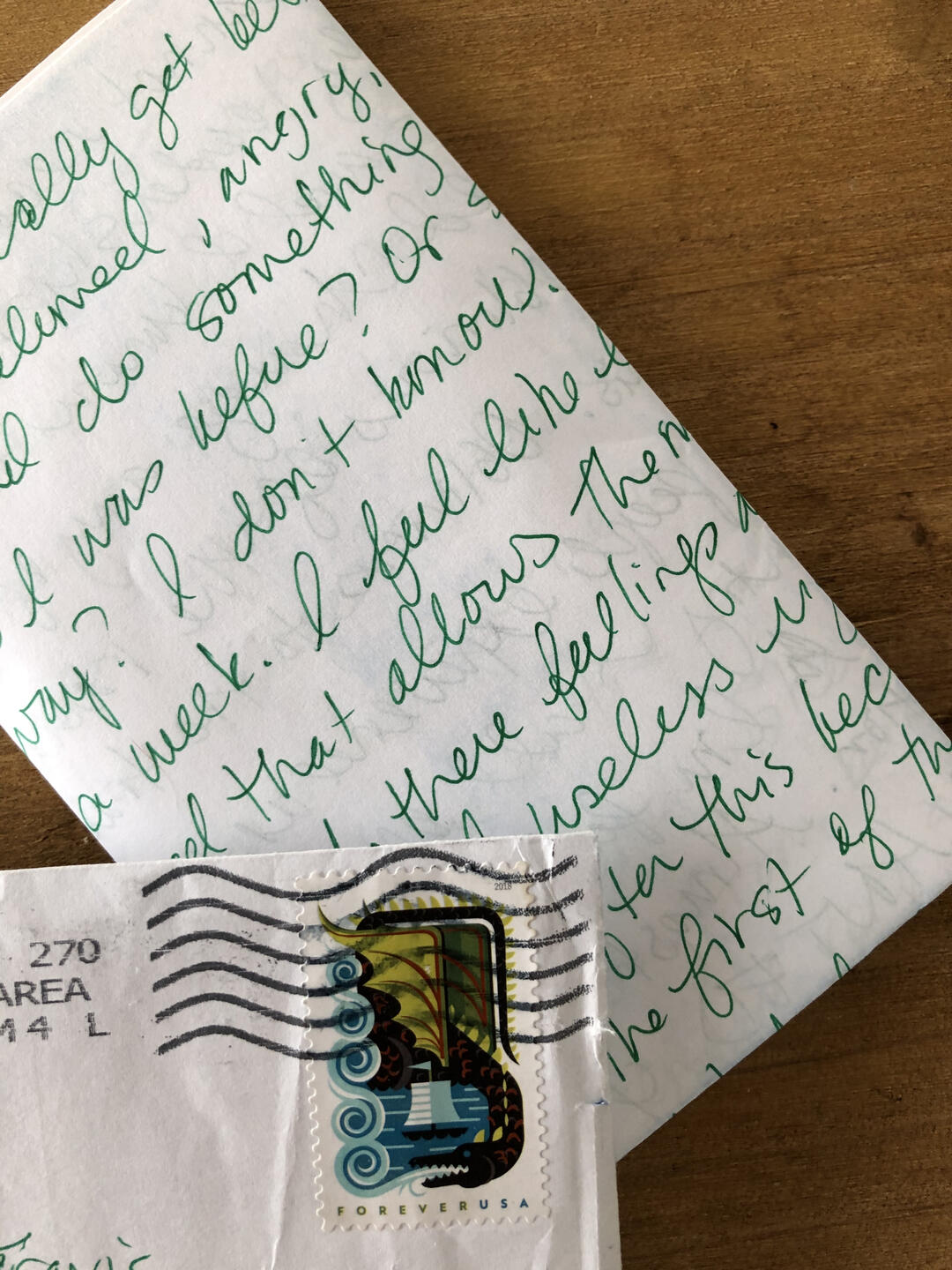
| Title | Epistolary Inquiry: Writing by Hand Alone Together |
| Format | Project presentation |
| Main language | English |
| Abstract | As artistic researchers, we engage in epistolary inquiry through the art of handwritten letters as a pathway for justice-oriented relational aesthetic practice. In the spring of 2020, we began a formal letter writing project to continue collaborating as researchers during the COVID-19 pandemic. Our practice of writing letters by hand is a form of artistic research. Although this project began with just the two of us, we are further developing it to a more public facing and collaborative process. While we are no longer on lockdown as we were in 2020, the cultural and political landscape mirrors that time. As art educators working in the United States, we wonder how letter writing as an aesthetic practice might serve as a method for imagining more just worlds. Writing letters by hand is a corporal analog engagement. Through handwriting we manifest our often hidden inner worlds into external material traces that connect us in more intimate ways. Perhaps this method allows us to be alone together. If I am writing a letter to someone, I am conscious of their existence beyond the space that I inhabit. In this way, the practice can collapse space and time and allow my internal world and intuitive ways of knowing to materialize as words on paper. As such, we contend that embodied relational engagements can counter the disconnection and isolation found in the rise of Artificial Intelligence. In response to AI and the dominance of digital communication technologies, we consider: What does handwritten letter writing offer as a mode of expression and connection that enables us to go deeper and engage the body even when we are apart? What other artists and artistic researchers engage in aesthetic epistolary practices and what can we learn from their work? In this presentation, we will share our own letter writing practice as a starting point for considering how others have engaged in epistolary methods of creative inquiry and how we might expand our practice further. |
| Link to the Exposition | https://www.researchcatalogue.net/view/4211843/4211842 |
| Image |
|
| Short biographies of the presenter(s) |
|
| Previous presentations or iterations of the research | Travis, S., & Hood, E. J. (2021, May 21). Letter writing as critical duoethnography. International Congress of Qualitative Inquiry, online. Hood, E. J., & Travis, S. (2022, May 20). Letter writing as creative and embodied methodology. International Congress of Qualitative Inquiry, online. Hood, E. J. (2024). Traces of friendship as inquiry. In S. Travis, A. G. Smith, C. Hernández-Cabal, & J. Lucero (Eds.), Experiments in art research: How do we live questions through art? (pp. 180-182). Routle |
| Additional information | |
| Spatial and technical requirements | Projector with Screen |
| Potential risks or ethical concerns | Not applicable. |
| Create a user account for SAR 2026 | Tá |
| Create new user | Emily Jean Hood |