Secondary tabs
Submission information
Submission Number: 188
Submission ID: 242
Submission UUID: 7e4996c6-376f-4f63-a41f-5f3509547cb6
Submission URI: /ga/form/submit-contribution
Cruthaithe: Thu, 26 Feb 2026 - 12:33
Déanta: Thu, 26 Feb 2026 - 15:44
Changed: Wed, 13 May 2026 - 08:14
Remote IP address: 212.219.220.149
Submitted by: Anonymous
Teanga: English
Is draft: Níl
Current page: webform_confirmation
| Given name | Annie |
|---|---|
| Surname | Morrad |
| amorrad@lincoln.ac.uk | |
| I understand that by submitting this form, I consent to the use of my data for the purposes of the 2026 Forum on Artistic Research'. | Tá |
| I agree to the terms of service. | Tá |
| Title | "From their view” |
| Format | Performance |
| Main language | English |
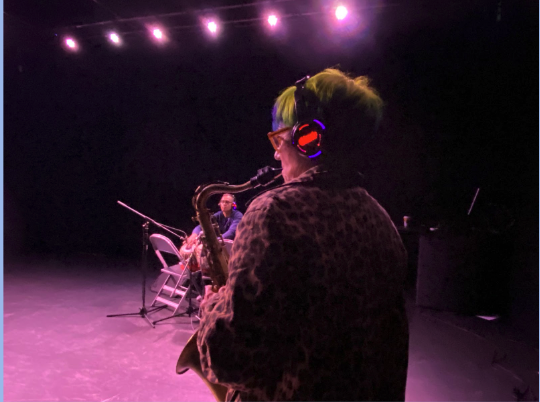
| Abstract | The transformation of image and sound into dialogue by Dr Yashaen Luckan, Dr Annie Morrad and a Majority Being (More Than Human). Working with what Gary Peters describes as “An improvisation that is substantial to the extent that it genuinely works through the dialectic of individuality and framework”. (Peters, 79, 2009). We are exploring how dialogue can transform the constituent parts. Eddie Prevost, writes that ‘The whole essence and meaning of dialogue is transformation’ (Prevost, 67, 1995). Through the following three elements, two sound instruments, taken from two different musical traditions, Indian and Western and one video using a dialogical method of interaction with the more than human avian. This performance explores the use of improvisation when in the dialectic framework. To engage with how live improvisation transforms through non hierarchical methods, where each ‘voice’ is from ‘the point of view’ of the participant. Always in relation to the other two, forming a collective language of image and sound. Through live sonic interaction, the project treats dialogue itself as a material practice: a way of writing in space; a choreography of listening; a method for thinking beyond linguistic determinism. The performance presentation ultimately proposes suspension as an artistic strategy for unsettling strict systems of legitimation and opening up shared, nonverbal practices of collaboration. The questions raised are: How does the visual form sound? How does the visual contribute to the improvisation that the sound is invested in? How is the silent video visual formed from the More Than Human (Dominate Beings), connecting to live instrumental sound from the humans? Where does visual and sound tonality link? How does rhythm in the flow of visual tonality contribute to the rhythmic pulse of the instruments? |
| Image |
|
| Short biographies of the presenter(s) |
|
| Previous presentations or iterations of the research | https://www.researchcatalogue.net/portal/search-result?fulltext=annie+morrad https://vimeo.com/1143802594?share=copy&fl=sv&fe=ci https://www.researchgate.net/profile/Annie-Morrad?ev=hdr_xprf https://vimeo.com/1158809434?share=copy&fl=sv&fe=ci anniemorrad.com (stories) |
| Additional information | Exploring the ineffable: artistic research and endangered arts practice beyond the verbal Dance, movement, and gesture as minoritised or endangered embodied knowledges Minoritisation and endangerment in visual, sonic, and digital cultures Subjugated knowledges, coloniality, and unsayability |
| Spatial and technical requirements | 2 microphones Stereo PA system Table + two chairs VGA/HDMI projection 10–15 minutes setup time |
| Potential risks or ethical concerns | none |
| Create a user account for SAR 2026 | Níl |