Secondary tabs
Submission information
Submission Number: 183
Submission ID: 236
Submission UUID: aac23b2f-48a0-4307-b56f-1e43ebebc758
Submission URI: /ga/form/submit-contribution
Cruthaithe: Thu, 26 Feb 2026 - 12:32
Déanta: Thu, 26 Feb 2026 - 12:58
Changed: Wed, 13 May 2026 - 08:50
Remote IP address: 87.212.87.122
Submitted by: Anonymous
Teanga: English
Is draft: Níl
Current page: webform_confirmation
Flagged: Tá
| Given name | Martina |
|---|---|
| Surname | Raponi |
| martina.raponi@noiserr.xyz | |
| I understand that by submitting this form, I consent to the use of my data for the purposes of the 2026 Forum on Artistic Research'. | Tá |
| I agree to the terms of service. | Tá |
| Title | Listening and Sounding at an Angle |
| Format | Poster presentation |
| Main language | English |
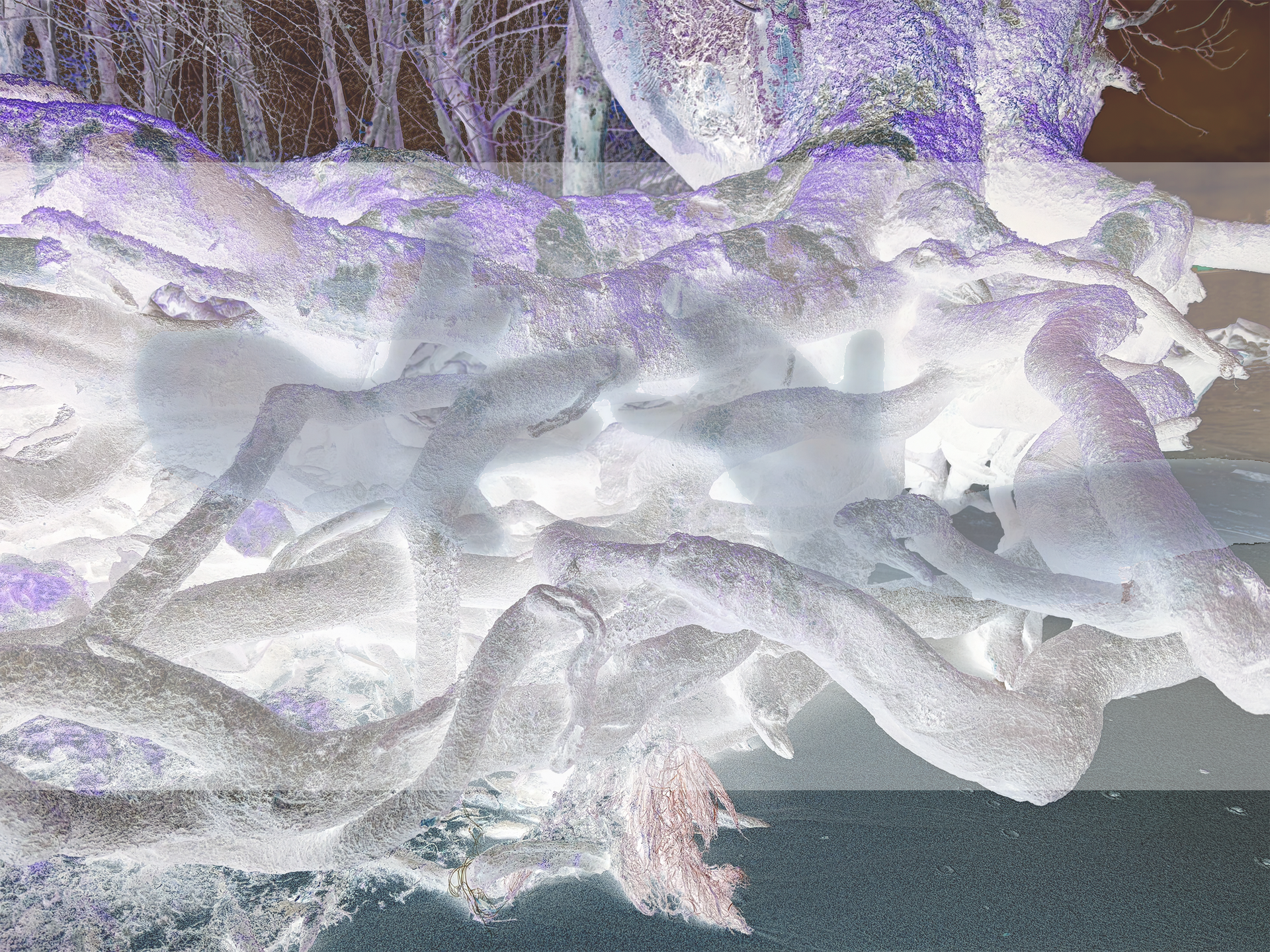
| Abstract | Sound is immersive and distributed. In distinction from visual stimuli, it works on us through a range of sensorial channels. In its rich vibrational embodiment it affords the construction of unique epistemologies (acoustemologies). What methods do we have with which to develop these ways of knowing through sound? What happens when our strategies fail us, when we encounter only silence? What can such moments of sound’s apparent failure teach us about relationality and coexistence? Our poster visualizes and sonifies our complementary projects: listening with other-than-human entities, and acknowledging Deaf sound practices within sonic discourses. We each find ourselves at an angle to norms of listening, because we meet silence, or an unheard. How can sonic practices test the elasticity of perceptual and conceptual frameworks, how can we create a critical vocabulary that acknowledges the language of ecosystems and sign languages as generative of new relational spaces of non-cochlear attunement? We investigate the value of vegetal silence for confounding listening assumptions. Plants do not communicate with sound that we can hear, and sound artists often resort to translating other data into sound. But what if we work instead with the interspecies silence as an active presence and allow it to be a paradoxical catalyst for more complex co-creation? Could it help us attune more deeply to an ethics of care, restraint, and multimodal responsiveness to ecological contexts? Deaf sonic practices challenge the presumed cochlearity of listening and sounding; they call for the widening of our analytical and sensorial tools to describe and appreciate the sonic knowledge that is produced outside the thresholds of audibility. How to account for sound practices that preferentially utilize language as a basic compositional tool? How can we redirect the “negative potential” of sound as “what is known by exclusion”, without reaffirfirming normative and audist epistemes? |
| Image |
|
| Short biographies of the presenter(s) |
|
| Previous presentations or iterations of the research | We are currently developing the content of the proposal into a poster visualization connecting our two lines of artistic research, alsongside the development of a lecture performance. |
| Additional information | The poster will be accompanied by a soundscape that will be accessible via QR code, unless the opportunity of installing a small speaker is granted. |
| Spatial and technical requirements | The poster will be A1 (around 60x85cm), unless there are specific guidelines that should be followed--in which case, we are happy to resize the print. |
| Potential risks or ethical concerns | |
| Create a user account for SAR 2026 | Tá |
| Create new user |