Secondary tabs
Submission information
Submission Number: 169
Submission ID: 221
Submission UUID: 54e82041-db6c-4221-8909-b6918d234dfd
Submission URI: /ga/form/submit-contribution
Cruthaithe: Wed, 25 Feb 2026 - 18:08
Déanta: Wed, 25 Feb 2026 - 18:13
Changed: Wed, 13 May 2026 - 08:43
Remote IP address: 85.76.0.4
Submitted by: Anonymous
Teanga: English
Is draft: Níl
Current page: webform_confirmation
Flagged: Tá
Personal Information
Your contribution
From the Earth I Have Come – Duodji Art Textile, Decolonisation and Language Revitalisation
Northern Sami
Artistic research in Sámi craft and design—duodji—opens perspectives on resilience, resistance, and renewal within the worlds of minoritized languages. In my artistic research practice, stories and language often form the point of departure for creative production. I interpret stories and oral traditions through duodji. Words do not live only in speech; they breathe through the work of the hands, in materials, in embodied knowledge, and in the land to which they are rooted.
The connection and interdependence between the Sámi language and duodji form a woven structure in which history is not a relic of the past, but a continuously renewing, living culture. Oral tradition brings forth the community’s strategies for maintaining linguistic autonomy and cultural distinctiveness despite headwinds.
The research draws on experimental art practices and methodologies of artistic research, through which Sámi craft and design unfold not only as processes of material making but also as forms of knowledge, world making, and quiet resistance. Each stitch, material, and instance of embodied knowledge carries within it the rhythm of language—not merely through names, but as a way of perceiving, sensing, and shaping relationality. In the research, language, craft, and culture emerge like a three part breathing pathway: none can live without the others. In this context, artistic research becomes a space of recovery, where even fragile linguistic threads can strengthen, and where making generates new possibilities for imagination. The research shows that material practices, linguistic meanings, and communal memories form a space and place where tradition can move, transform, and continue to breathe.
I interpret duodji within its own context. I have developed a theoretical approach for interpreting duodji. The structure of the gákti opens a linguistic and cultural standpoint from which duodji can be examined, enabling a decolonial rethinking of design and craft research traditions.
The connection and interdependence between the Sámi language and duodji form a woven structure in which history is not a relic of the past, but a continuously renewing, living culture. Oral tradition brings forth the community’s strategies for maintaining linguistic autonomy and cultural distinctiveness despite headwinds.
The research draws on experimental art practices and methodologies of artistic research, through which Sámi craft and design unfold not only as processes of material making but also as forms of knowledge, world making, and quiet resistance. Each stitch, material, and instance of embodied knowledge carries within it the rhythm of language—not merely through names, but as a way of perceiving, sensing, and shaping relationality. In the research, language, craft, and culture emerge like a three part breathing pathway: none can live without the others. In this context, artistic research becomes a space of recovery, where even fragile linguistic threads can strengthen, and where making generates new possibilities for imagination. The research shows that material practices, linguistic meanings, and communal memories form a space and place where tradition can move, transform, and continue to breathe.
I interpret duodji within its own context. I have developed a theoretical approach for interpreting duodji. The structure of the gákti opens a linguistic and cultural standpoint from which duodji can be examined, enabling a decolonial rethinking of design and craft research traditions.
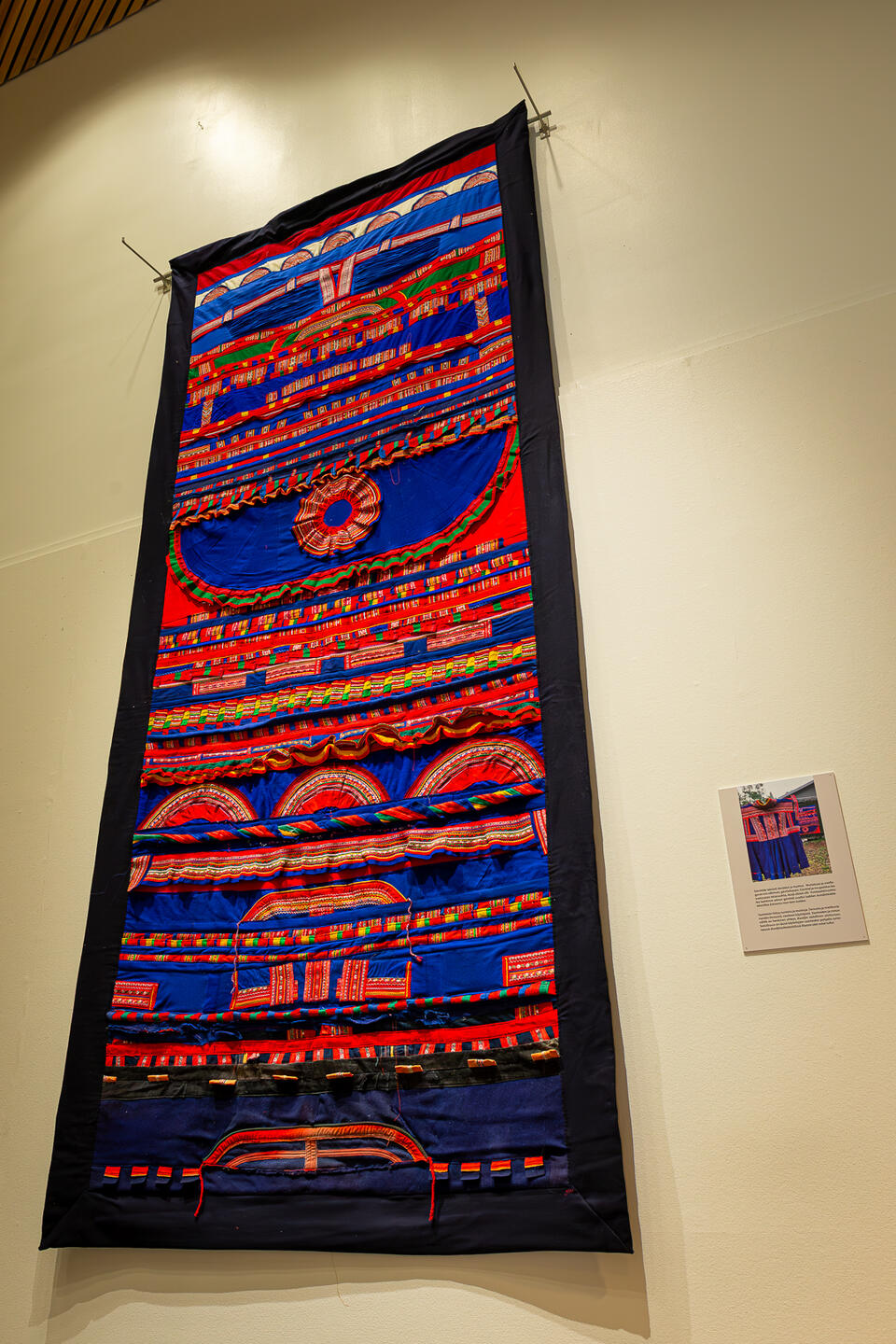
- I am an artistic researcher and was previously a teacher of the Sámi language. I have attained formal qualifications through a doctoral degree and have thus drawn upon a career spanning over 40 years as a craftsman. Today, I teach and conduct research in duodji at the world's only Sámi-language educational institution, the Sámi University of Applied Sciences in Kautokeino, Norway. The Sámi language is the language of work and administration.
I conduct artistic research by combining theoretical reflection with creating art and craft by hand.
{Empty}
Requirements
I could present my reflections theoretically, for example, as a PowerPoint presentation, while also bringing the art and crafts I have made. In that way, my way of understanding the world and interpreting it through duodji becomes evident. In practice, all I need is a computer to present the theoretical part.
Laptop
Ethical action and thinking involve maintaining balance and are grounded in key features of the worldview — such as the agency of nature, the continuity between generations, and the internal responsibilities within the community. The relationship with nature is both practical and symbolic: natural resources are not used wastefully or beyond one’s needs. Within the community, people act reciprocally. Traditional knowledge includes values, skills, and a worldview. As a people, we hold the right to
Tá
Maarit Magga