Secondary tabs
Submission information
Submission Number: 368
Submission ID: 435
Submission UUID: 4378985b-02f9-4260-9d44-51154df6c649
Submission URI: /ga/form/submit-contribution
Cruthaithe: Mon, 2 Mar 2026 - 11:02
Déanta: Mon, 2 Mar 2026 - 11:03
Changed: Wed, 13 May 2026 - 08:49
Remote IP address: 93.44.2.237
Submitted by: Anonymous
Teanga: English
Is draft: Níl
Current page: webform_confirmation
Flagged: Tá
Personal Information
Your contribution
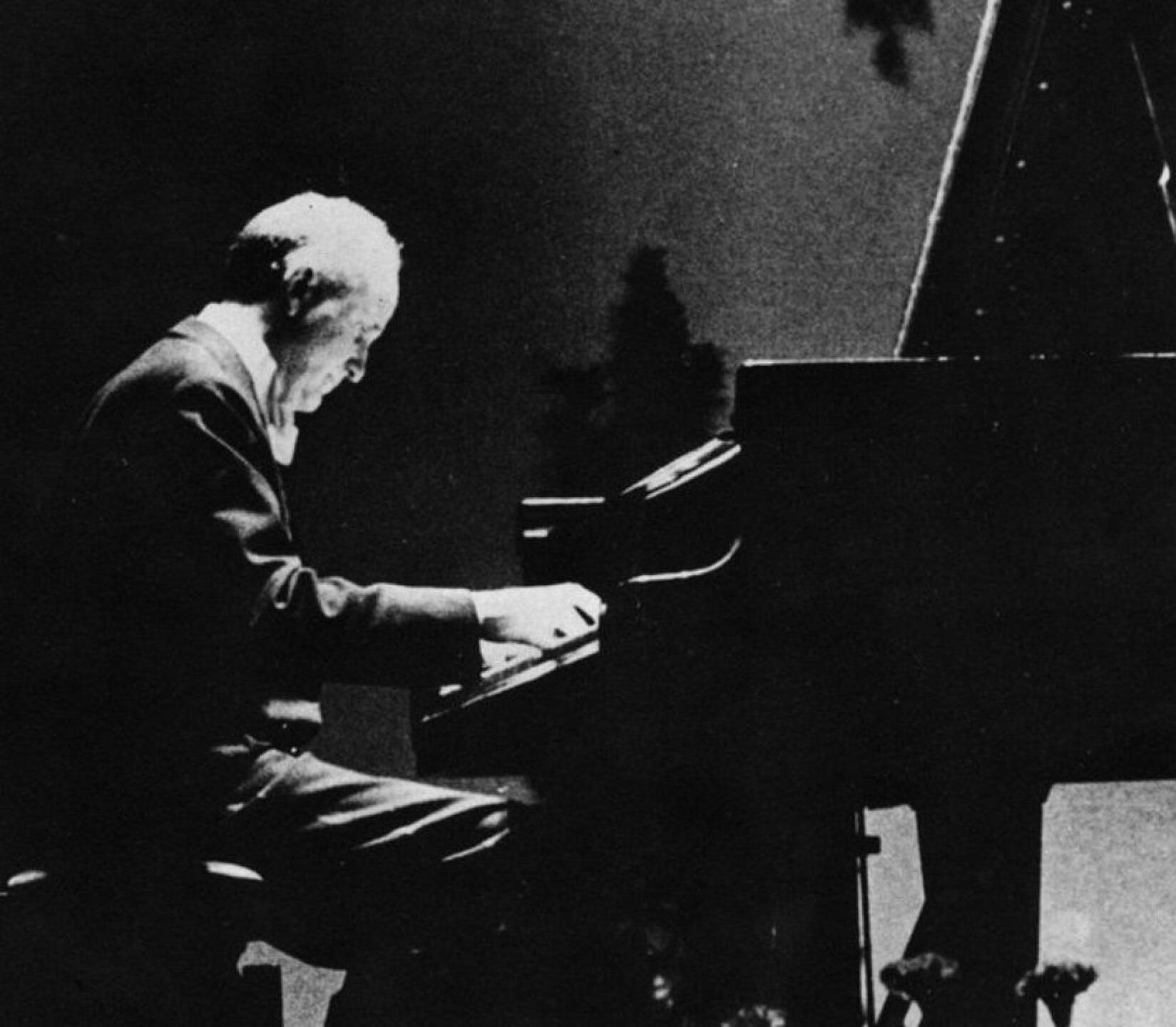
Legacy of the Unseen: The Artistic and Pedagogical Heritage of Blind Pianist Alberto Mozzati
English
The pedagogical practices of visually impaired musicians within Italian Institutes for the Blind have received limited empirical attention, despite their relevance for understanding alternative modes of musical learning. Alberto Mozzati, an Italian blind concert pianist and influential twentieth-century pedagogue, developed a piano teaching approach grounded in auditory, tactile, and kinaesthetic strategies. His work provides a historically situated case through which non-visual forms of musical knowledge transmission can be examined.
Conducted in collaboration with the Blind People Institute of Milan (Historical Archives and Typhlopedagogical Service), this study investigates how non-visual pedagogical strategies were implemented and experienced in Mozzati’s teaching, and explores their implications for musical learning and skill development.
The research adopts a qualitative empirical design integrating archival materials, pedagogical documents, semi-structured interviews with former students, performance-based exploration of selected strategies, and didactic laboratories involving blind students. Data were analysed using thematic analysis to identify recurring pedagogical patterns and perceptual modalities.
Findings indicate that Mozzati prioritised listening, bodily awareness, and imitation over visual score-based instruction. Former students describe heightened attention to sound, touch, and movement, alongside early integration of technical and expressive elements. Laboratory observations suggest that such strategies support the internalisation of musical structures and interpretative decision-making across proficiency levels.
By empirically examining this marginalised teaching context, the study contributes to discussions on embodied learning, accessibility, and diversity in music education, showing how historically grounded case studies can inform contemporary pedagogical research.
Conducted in collaboration with the Blind People Institute of Milan (Historical Archives and Typhlopedagogical Service), this study investigates how non-visual pedagogical strategies were implemented and experienced in Mozzati’s teaching, and explores their implications for musical learning and skill development.
The research adopts a qualitative empirical design integrating archival materials, pedagogical documents, semi-structured interviews with former students, performance-based exploration of selected strategies, and didactic laboratories involving blind students. Data were analysed using thematic analysis to identify recurring pedagogical patterns and perceptual modalities.
Findings indicate that Mozzati prioritised listening, bodily awareness, and imitation over visual score-based instruction. Former students describe heightened attention to sound, touch, and movement, alongside early integration of technical and expressive elements. Laboratory observations suggest that such strategies support the internalisation of musical structures and interpretative decision-making across proficiency levels.
By empirically examining this marginalised teaching context, the study contributes to discussions on embodied learning, accessibility, and diversity in music education, showing how historically grounded case studies can inform contemporary pedagogical research.
- Pianist and PhD candidate at the Conservatory of Brescia, his research focuses on the artistic and pedagogical legacy of the blind pianist Alberto Mozzati. He graduated with honours in Piano from the Conservatory of Milan, studying with Silvia Limongelli and Davide Cabassi. Prizewinner in solo and chamber competitions, he has performed in Italy, Portugal, Germany, Poland, Latvia, and Russia, including at MITO 2024 in Milan. Active in contemporary music both as soloist and with Sinthomo Ensemble, he also holds a degree in Mathematics and serves as principal organist in Milan.
{Empty}
Requirements
{Empty}
{Empty}
{Empty}
Níl