Secondary tabs
Submission information
Submission Number: 349
Submission ID: 415
Submission UUID: 32d6b915-cde9-4b18-ae04-70d4fcac37d0
Submission URI: /ga/form/submit-contribution
Cruthaithe: Sun, 1 Mar 2026 - 21:53
Déanta: Sun, 1 Mar 2026 - 21:54
Changed: Wed, 13 May 2026 - 08:14
Remote IP address: 122.150.152.250
Submitted by: Anonymous
Teanga: English
Is draft: Níl
Current page: webform_confirmation
Personal Information
Your contribution
The Sketchbook as a Dowsing Rod: Drawing to See and Surface Wetlands and their Kin
English
Amidst Sydney’s threatened, reshaped, and overlooked urban wetlands, this project presentation explores how place-based, creative research methodology might help to shine light on “undergrounded”(Coyne, 2024) urban stories of water within the Sydney context. Reflecting on the process of finding and seeing hidden, endangered and conceptual water worlds, in order to “surface” and translate narratives of water and it's kin, this research calls to an embodied, sketchbook drawing practice as a mode of attunement to “bear witness” (Dooren & Bird Rose, 2017) to more-than-human resilience in the face of urbanisation, habitat loss and climate breakdown.
This is presented in three parts. Beginning with an introduction to the project ‘Surfacing Urban Wetlands’ and my PhD research that accompanies it, the intentions of this research and how embodied sketchbook practices are being utilised and qualified within it will be laid out. This research posits the sketchbook as a “dowsing rod” of sorts, working to help locate and listen to silenced, undergrounded ecosystems and places. Following on from this, I will present a positioned, critical analysis of the historic role of drawing, mapping and walking in so-called Australia. In Colonial-settler’s violent understandings of placemaking, drawings have been complicit in the destruction and violence towards both First Nations people and Country (Mannering, 2024), thus in section three of this presentation, this research will present how new ways of approaching these methodological creative practices might work as modes for embodied understanding and listening. Ultimately, through this project, an offering of methodological novelty is presented that aims to position the sketchbook, and sketchbook drawing practice, as an embodied extension of the author in place; as a tool through which to "divine" water stories; and a position from which to lay crucial groundwork to enact deep listening, care, and respect on Country.
This is presented in three parts. Beginning with an introduction to the project ‘Surfacing Urban Wetlands’ and my PhD research that accompanies it, the intentions of this research and how embodied sketchbook practices are being utilised and qualified within it will be laid out. This research posits the sketchbook as a “dowsing rod” of sorts, working to help locate and listen to silenced, undergrounded ecosystems and places. Following on from this, I will present a positioned, critical analysis of the historic role of drawing, mapping and walking in so-called Australia. In Colonial-settler’s violent understandings of placemaking, drawings have been complicit in the destruction and violence towards both First Nations people and Country (Mannering, 2024), thus in section three of this presentation, this research will present how new ways of approaching these methodological creative practices might work as modes for embodied understanding and listening. Ultimately, through this project, an offering of methodological novelty is presented that aims to position the sketchbook, and sketchbook drawing practice, as an embodied extension of the author in place; as a tool through which to "divine" water stories; and a position from which to lay crucial groundwork to enact deep listening, care, and respect on Country.
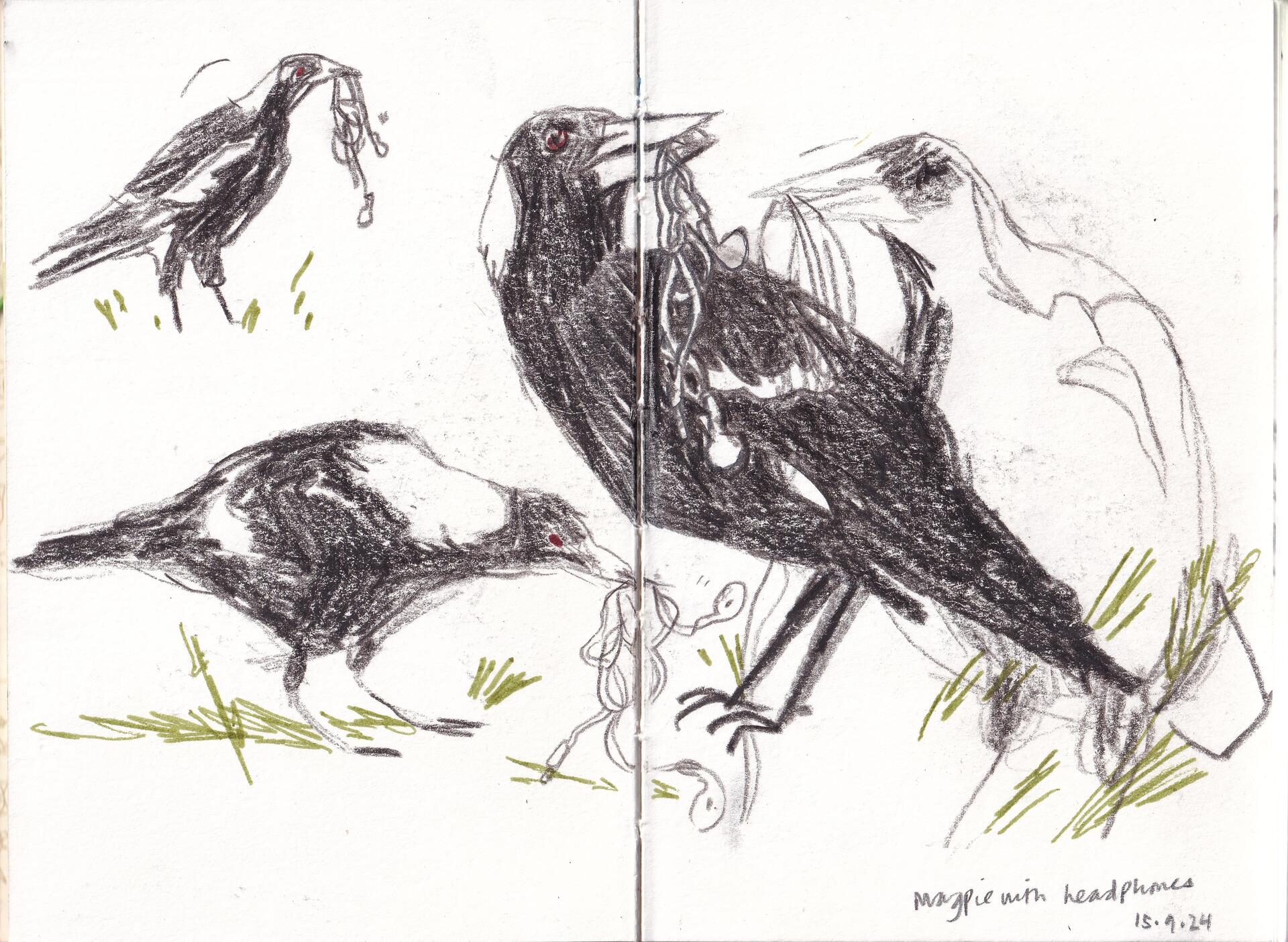
- Holly O'Neil is a multimodal researcher, anthropologist and artist. O'Neil's PhD project, 'Silenced, Invisible, Disobedient: Attuning to Sydney's Urban Wetlands through Multimodal Storytelling and Methodology', explores how multimodal, practice-based research can unearth and amplify stories of Sydney's wetlands in order to foster deeper, interdisciplinary engagement with place, climate, and ecological responsibility. Her work runs alongside the ARC funded project 'Surfacing Urban Wetlands', where she works with an incredible interdisciplinary team to "surface" the urban wetlands that Sydney is built on through design and research.
{Empty}
Requirements
{Empty}
{Empty}
{Empty}
Tá
Holly O'Neil