Secondary tabs
Submission information
Submission Number: 321
Submission ID: 387
Submission UUID: 073dc3e1-5299-4310-908a-5e6b93e509cb
Submission URI: /ga/form/submit-contribution
Cruthaithe: Sun, 1 Mar 2026 - 16:16
Déanta: Mon, 2 Mar 2026 - 00:12
Changed: Wed, 13 May 2026 - 08:48
Remote IP address: 80.233.39.67
Submitted by: Anonymous
Teanga: English
Is draft: Níl
Current page: webform_confirmation
Flagged: Tá
Personal Information
Your contribution
Bogscape
English
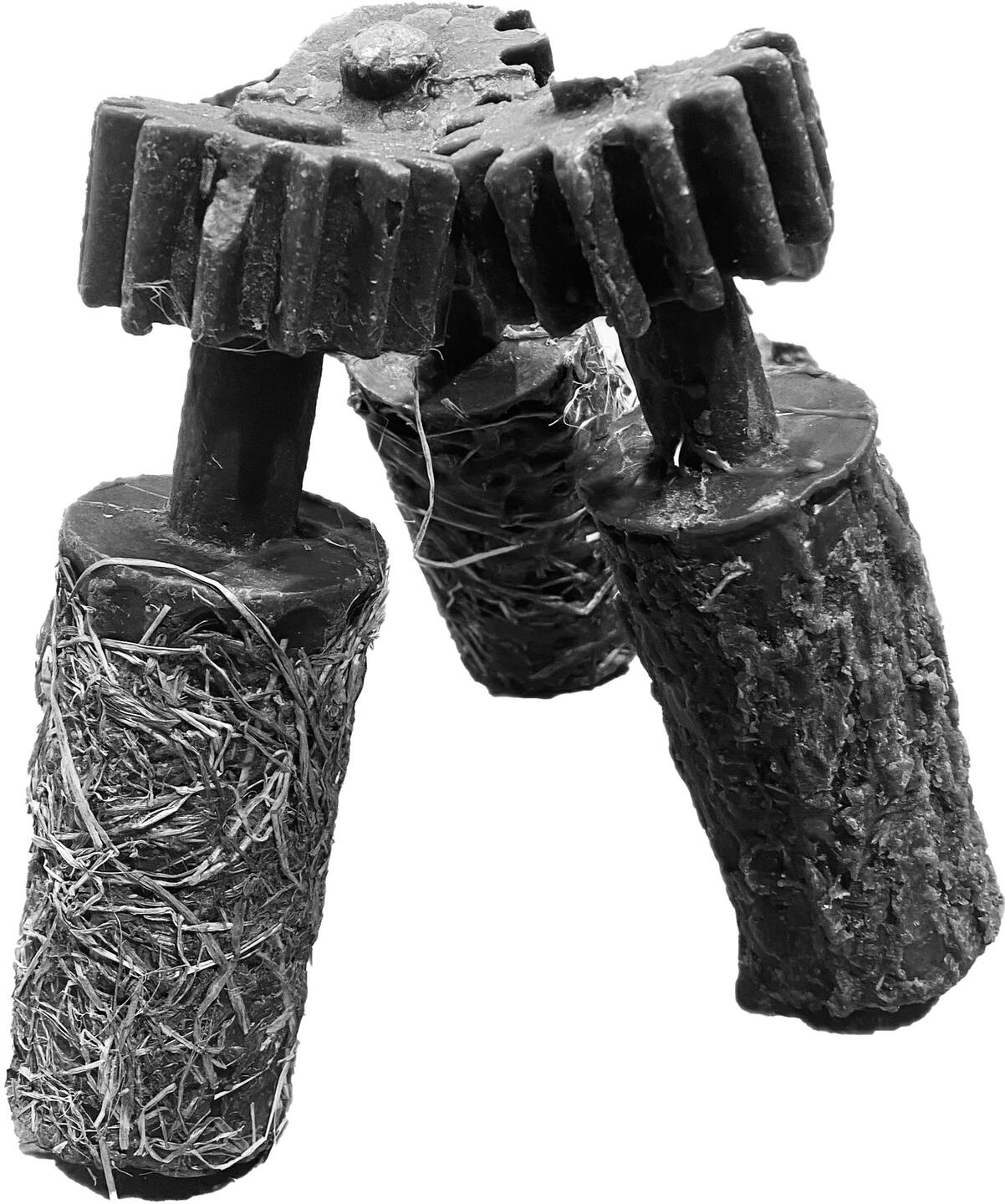
A stack is never a single thing: it is an assemblage, a gathering of fragments placed one atop another, their weight shifting with each new addition. Unlike a tower or a monument, the stack is not built toward permanence or grandeur. It is provisional, contingent, and precarious. It can topple, re-form, or disperse at any moment. Yet it is precisely in this fragility that its strength lies: the stack makes visible the ongoing processes of collecting, layering, balancing, and negotiating that underpin my research.
The stack resonates with the bogscape in which much of my research is situated. In the bog, material is never static but accumulates through slow, compressed layering season upon season. This is not linear time, but each layer bears the traces of what came before.
To stack is to engage in rhythm the repetitive placing of one element upon another, the pause, the adjustment, the recalibration when the balance wavers. Like music, it is rhythmic, it emerges through embodied negotiation with weight, friction, and gravity. The stack, then, is a lived score, enacted in time.
The stack allows me to conceptualise my research not as a finished object but as a provisional and evolving form. It holds together the tension between order and disorder, intention and accident, gravity, and lightness. It acknowledges the temporality of practice, where knowledge is always in the making, always layered, always at risk of collapse. To work within a stack is to embrace instability, to recognise that meaning is not singular but accumulated, pressed together like the strata of a bog.
Thus, the stack becomes both a material image and a methodological orientation: an insistence that research is not linear progress toward a fixed outcome but a continual layering of practice, reflection, and entanglement.
The stack resonates with the bogscape in which much of my research is situated. In the bog, material is never static but accumulates through slow, compressed layering season upon season. This is not linear time, but each layer bears the traces of what came before.
To stack is to engage in rhythm the repetitive placing of one element upon another, the pause, the adjustment, the recalibration when the balance wavers. Like music, it is rhythmic, it emerges through embodied negotiation with weight, friction, and gravity. The stack, then, is a lived score, enacted in time.
The stack allows me to conceptualise my research not as a finished object but as a provisional and evolving form. It holds together the tension between order and disorder, intention and accident, gravity, and lightness. It acknowledges the temporality of practice, where knowledge is always in the making, always layered, always at risk of collapse. To work within a stack is to embrace instability, to recognise that meaning is not singular but accumulated, pressed together like the strata of a bog.
Thus, the stack becomes both a material image and a methodological orientation: an insistence that research is not linear progress toward a fixed outcome but a continual layering of practice, reflection, and entanglement.
- Catherine Hehir is a PhD researcher at DJCAD, Dundee, and Lecturer at Crawford College of Art and Design, MTU Cork. Her practice operates in the Expanded Field of Print through fieldwork, collaboration, and natural materials. Working across cast objects, traces, and imprints, she frames print as an interactive, multidisciplinary encounter: "I integrate cast objects, traces, and imprints as forms of interactive print thinking, inviting viewers to engage actively with the work. This process not only preserves traditional knowledge but also highlights overlooked or redundant aspects of material practices." Current fieldwork in the Irish bogscape concerns elements of the past as ways of being with the contemporary world.
The IMPACT 13 International Printmaking Conference October 9–12, 2025, at the Université du Québec à Trois-Rivières (UQTR) in Quebec, Canada Presentation Paper. The bog as Print room. DJCAD Research EXPO 2024 .Talk ONE Leans into ANOTHER , Soft Cell Exhibtion January 2025 Bogscape Exhibition and Talk at James barry Gallery INGENIUM European University Alliance. Upcoming roundtable discussion at Grande parade Gallery Cork EAL Ecologies Art Lab 'Land as collaborator,' April 2026.
Requirements
a poster presentation requirement only
a poster presentation requirement only
None
Tá
Catherine Hehir