Secondary tabs
Submission information
Submission Number: 251
Submission ID: 311
Submission UUID: 55f9bb38-bb5b-430a-b94f-d4a290c8d469
Submission URI: /ga/form/submit-contribution
Cruthaithe: Sat, 28 Feb 2026 - 16:10
Déanta: Sat, 28 Feb 2026 - 18:11
Changed: Wed, 13 May 2026 - 08:48
Remote IP address: 99.230.33.43
Submitted by: Anonymous
Teanga: English
Is draft: Níl
Current page: webform_confirmation
Flagged: Tá
Personal Information
Your contribution
Reinvigorating digitality through artistic tenacity
English
This poster explores handmaking to AI digital generation, offering insights into artistic tenacity—both intuitive and deliberate—that support creation that holds significance in the face of technological advancement. The current digital production landscape, often criticized as “AI slop,” faces widespread criticism across various fields, including art, design, craft, writing, pop culture, and internet culture. Remarkably, within a short time, AI has become the dominant discussion. The term “slop” implies not only a decline in quality but also an inevitability. How can artistic perseverance combat this seemingly unavoidable shift? In certain contexts, revitalization can be achieved by deliberately applying traditional artistic methodologies. By embracing hands-on processes, craft reinvention, material exploration, and critical reflection, artmaking can counteract overproduction and foster originality that AI tools alone cannot achieve. Artistic practice grounded in critical dialogue, sensory engagement, intuitive creation, and the manipulation of both digital and physical materials offers a counterbalance to purely technological stimulation. This revitalization doesn’t stem from rejecting digitality but from reaffirming the generative potential of human-centred, arts-first experimentation. It allows innovation to evolve in dialogue with emerging technologies while preserving aesthetic and conceptual richness. Re-framing AI as collective intelligence rather than artificial intelligence opens a new perspective on this evolving mode of knowledge assembly and distribution. Why does the culmination of collective realization result in slop rather than excellence? Overwhelming and relentless production, regardless of its specific qualities, diminishes meaning. Meaning emerges from our relationship with artifacts or concepts. Artistic research provides a pathway to creating meaning using new tools while retaining age-old knowledge that AI has not been able to aggregate.
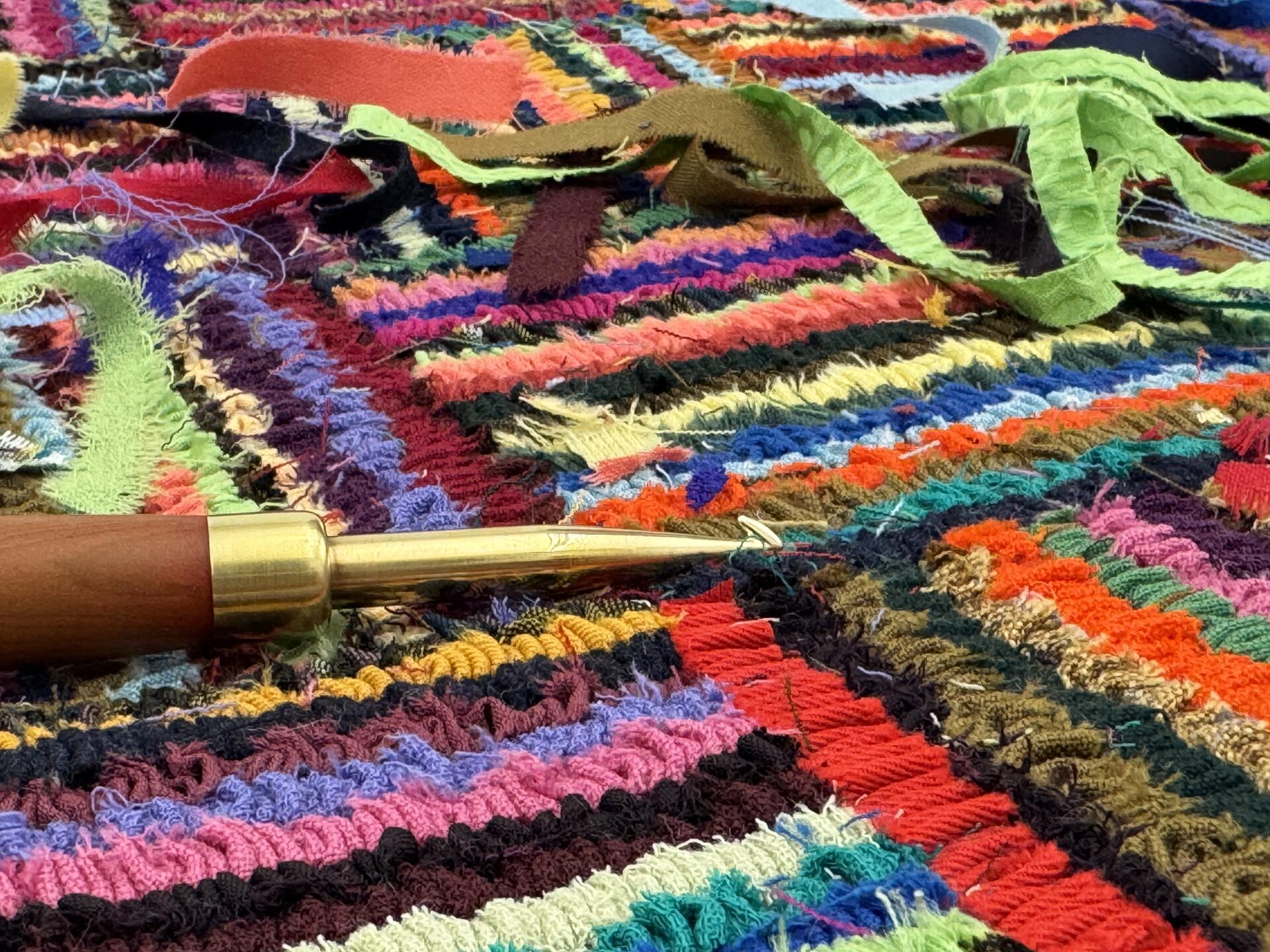
- Lynne Heller is a post-disciplinary artist, designer, educator and academic. Her interests encompass both material and virtual culture, AR/VR performance, textile practices, and graphic novels. Heller completed her MFA at the School of the Art Institute of Chicago and her PhD at University College Dublin, Ireland. Her research was practice-based, with a specialty in feminism and Digital Media Arts. She is an Adjunct Professor, Graduate Faculty and Co-director of the Data Materialization Studio at OCAD University; Adjunct Professor SMARTlab, University College Dublin; Reviews Editor of Virtual Creativity, Intellect; and Principal Investigator of the SSHRC funded Partnership Development Grant, Thinking Through Craft and the Digital Turn.
{Empty}
Requirements
n/a
n/a
n/a
Tá
Lynne Heller