Secondary tabs
Submission information
Submission Number: 238
Submission ID: 297
Submission UUID: dbe5ddd2-e9dd-4254-815c-839c57448319
Submission URI: /ga/form/submit-contribution
Cruthaithe: Sat, 28 Feb 2026 - 14:59
Déanta: Sat, 28 Feb 2026 - 15:19
Changed: Wed, 13 May 2026 - 08:31
Remote IP address: 86.49.224.10
Submitted by: Richie Lux Kramár
Teanga: English
Is draft: Níl
Current page: webform_confirmation
Flagged: Tá
Personal Information
Your contribution
The Prompter: Discord, Care, and Cues for Survival
English
In the opera house, the prompter works as a vocal prosthesis, a disembodied voice dedicated to filling gaps when the operatic machine falters. This figure lives in perpetual readiness to serve yet is structurally excluded from authorship and public history. This research identifies a parallel between the prompter and the trans subject through their shared navigation of the gap between body and voice. While this discord, an asymmetrical or desynchronized relationship between how one sounds and how one is seen, is a site of safety and an official function for the prompter, it remains a site of high-stakes danger and political endangerment for the trans subject.
This lecture performance explores how the prompter’s labor can be reclaimed as a survival strategy. It moves away from the institutional demand to save or document the trans voice, proposing a methodology of cruising instead. Much like the silent high-stakes codes of cruising, prompting is a private linguistic exchange, a shorthand of whispered cues and cryptic marks on a score intended for an audience of one. By treating the vocal score not as fixed but as a site for unauthorized intimate connection, the work explores the pleasure a trans subject derives from a voice that refuses to appear for the general public.
The performance enacts this discord as a tactile labor of care. The presentation is intentionally non-frontal and desynchronized, creating a tension that requires the audience to proactively activate the material. Through live vocalization and opaque video traces that maintain a specific gaze without offering full disclosure, the work invites a process of participatory sense-making. Rather than a smooth delivery of results, the performance functions as an open rehearsal, a space where the trans subject and the prompter become co-conspirators in a practice of resistance against narrative standardization.
This lecture performance explores how the prompter’s labor can be reclaimed as a survival strategy. It moves away from the institutional demand to save or document the trans voice, proposing a methodology of cruising instead. Much like the silent high-stakes codes of cruising, prompting is a private linguistic exchange, a shorthand of whispered cues and cryptic marks on a score intended for an audience of one. By treating the vocal score not as fixed but as a site for unauthorized intimate connection, the work explores the pleasure a trans subject derives from a voice that refuses to appear for the general public.
The performance enacts this discord as a tactile labor of care. The presentation is intentionally non-frontal and desynchronized, creating a tension that requires the audience to proactively activate the material. Through live vocalization and opaque video traces that maintain a specific gaze without offering full disclosure, the work invites a process of participatory sense-making. Rather than a smooth delivery of results, the performance functions as an open rehearsal, a space where the trans subject and the prompter become co-conspirators in a practice of resistance against narrative standardization.
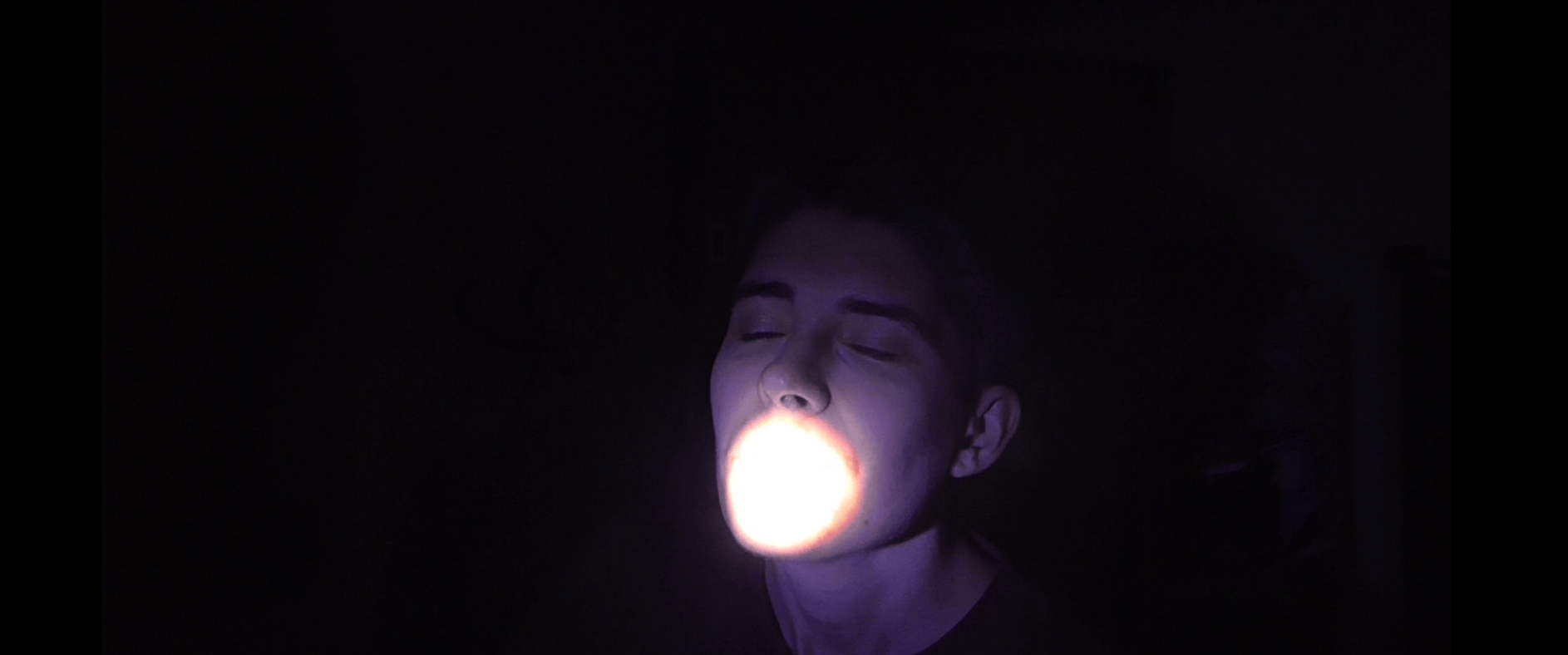
- Richie Lux Kramár (Richard L. Kramár) is a poet, translator, director, dramaturge, kabarettier, and librettist. He is currently pursuing a PhD in Dramatic Arts at Janáček Academy of Performing Arts in Brno. He co-founded the independent cultural space Divadlo na ôsmom poschodí in Bratislava. He has published four poetry collections and is part of the editor-in-chief duo of Psí víno, a digital curatorial platform for contemporary poetry. During the 2022/23 season, he worked as a full-time prompter at the State Opera in Prague, where he now continues as an external collaborator. The chamber opera TU JE OSTROV, for which he wrote the libretto, is set to premiere at the Janáček Brno 2026 festival.
This lecture performance stems from the doctoral research project THE MONSTER SINGS (JAMU). Elements of this research have been peer-reviewed and presented in the following contexts:
Peer-reviewed Journals: "Mouthing into the void: Can the prompter sing?" (JIVS, 2026); "I Love Listening to Music and Imagining Things Happening" (VIS, 2025).
Conference Presentations (2025): PARSE (Gothenburg); Teritoria umění (Prague); Dance Resonance (Vienna); The Culture of Attractions (Torun); IFTR (Cologne).
Peer-reviewed Journals: "Mouthing into the void: Can the prompter sing?" (JIVS, 2026); "I Love Listening to Music and Imagining Things Happening" (VIS, 2025).
Conference Presentations (2025): PARSE (Gothenburg); Teritoria umění (Prague); Dance Resonance (Vienna); The Culture of Attractions (Torun); IFTR (Cologne).
Requirements
This 20-minute lecture performance functions as a situated rehearsal, rejecting a directive or smooth style in favor of a fragmented, haptic engagement. The performance centers on the figure of the prompter, focusing on the physical strain of throwing a voice that belongs to an other. This is mirrored in the text: an unfaithful reconstruction of operatic fragments and personal reflections that leak, emphasizing the inherent relationality of language and the fact that we always receive our words from someone else.
The accompanying media, video projections serving as opaque traces, offer a gaze that is both seductive and non-coercive. By creating a space of partial invisibility, the format allows the audience to determine their own degree of participation. Ultimately, it is a transmission that values the interval, the echo, and the unfaithful memory over the standardized institutional record.
The accompanying media, video projections serving as opaque traces, offer a gaze that is both seductive and non-coercive. By creating a space of partial invisibility, the format allows the audience to determine their own degree of participation. Ultimately, it is a transmission that values the interval, the echo, and the unfaithful memory over the standardized institutional record.
AV: Projector and screen; stereo audio output for a laptop.
Furniture: One music stand or small table, chair.
Lighting: The ability to dim lights is appreciated but not necessary.
Space: A setup that allows for a non-frontal relationship with the audience is appreciated but not necessary.
Furniture: One music stand or small table, chair.
Lighting: The ability to dim lights is appreciated but not necessary.
Space: A setup that allows for a non-frontal relationship with the audience is appreciated but not necessary.
The performance involves live vocalization and themes related to trans identity. There are no physical risks to the audience. Practically, the research uses opacity as a framework to ensure that personal or community-specific data is not made public, protecting the anonymity of sources. All archival operatic materials are used under fair use for artistic research. Audience participation is voluntary; the non-frontal setup allows attendees to choose their own level of proximity and engagement.
Tá
Richie Lux Kramár